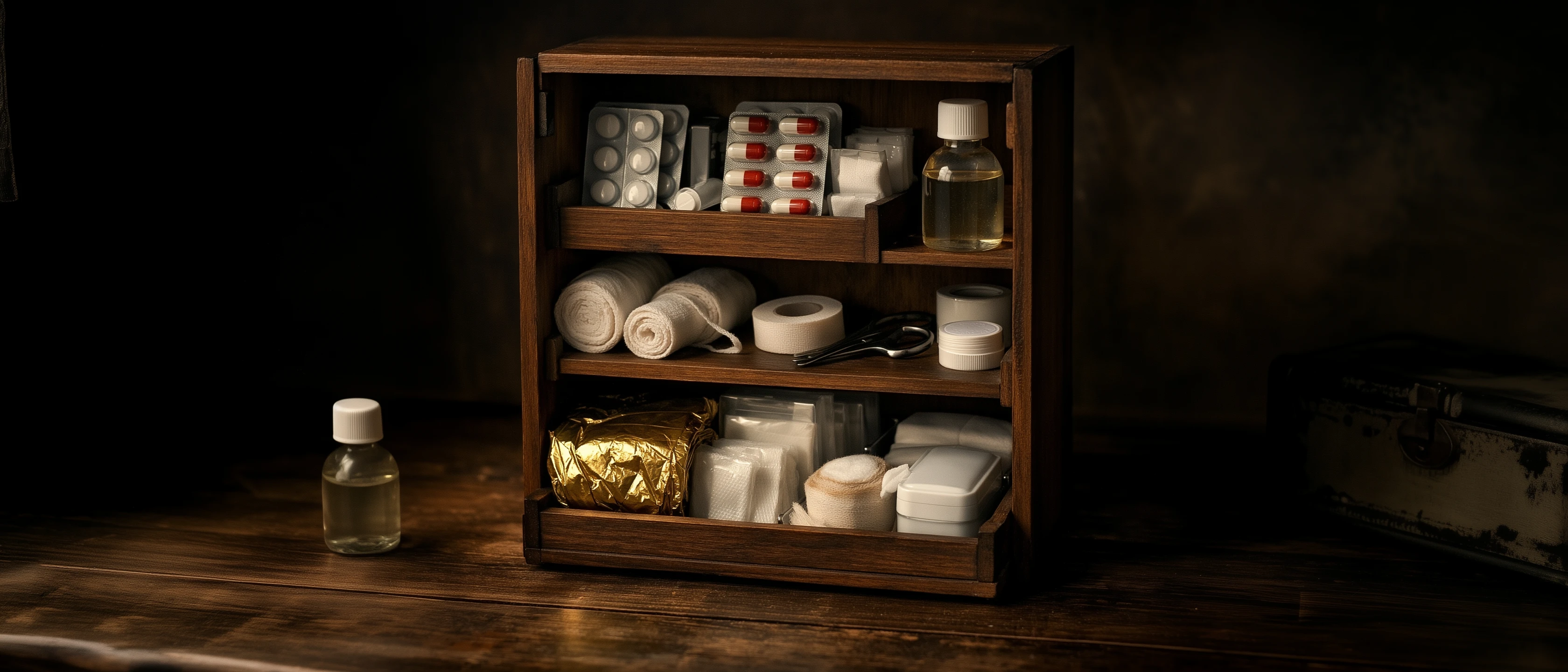
A first aid kit isn’t a nice-to-have – it’s essential kit. Whether hiking, traveling, or at home: being prepared means you can act calmly and effectively in emergencies. The problem? Most store-bought kits are either stuffed with useless items or missing the things that really matter.
Here’s what a genuinely good first aid kit should contain.
# The Core Essentials
# Wound Care
Wounds are the most common scenario – from small cuts to deeper lacerations. You need:
- Assorted plasters/bandages – compress plasters for larger wounds, finger bandages for cuts
- Sterile wound dressings (5×5 cm and 10×10 cm) – absorbent and sterile
- Elastic bandages (2–3 inch widths) – to secure dressings
- Triangular bandage – versatile: arm sling, pressure bandage, improvised tourniquet
- Sterile tweezers – for removing splinters or foreign objects
- Wound disinfectant – modern options like Octenisept; skip the hydrogen peroxide, it’s outdated
# Stabilization and Protection
- SAM Splint – flexible, lightweight splint for fractures and sprains
- Blister plasters (e.g. Compeed) – essential on long hikes
- Emergency blanket – retains 90% of body heat, critical for shock or hypothermia
# Medications
Only include what you know how to use:
- Ibuprofen 400 mg – pain, fever, inflammation
- Antihistamine (e.g. Cetirizine) – for allergic reactions
- Activated charcoal tablets – for ingested toxins or severe diarrhea
- Motion sickness patches – for long boat or bus trips
# What to Leave Out
Many kits are packed with things nobody needs: individual cotton swabs, paper tissues, safety pins without purpose. Every gram counts – especially in a pack.
Skip:
- Low-quality mini bandages with no adhesion
- Bandage scissors if you already carry a decent pocket knife
- Duplicate items that just eat up space
# Pre-made Kit or Build Your Own?
Pre-made kits are convenient and often cheaper than buying individual items:
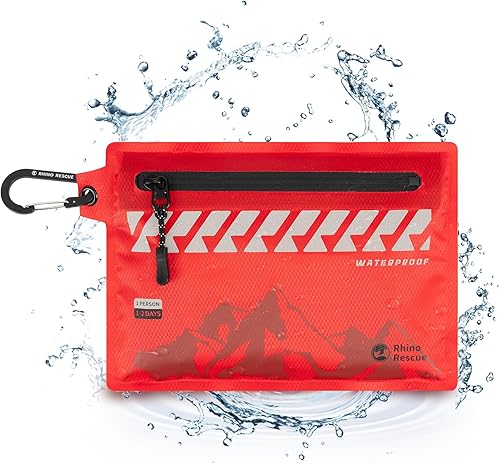 Rhino Rescue Erste-Hilfe-Set~25 €View →
The Rhino Rescue First Aid Kit (~25 €) is compact, well-organized, and covers the essential basics – plasters, dressings, bandages, triangular bandage, and emergency blanket in a durable pouch. If you want full control, build your own kit from scratch. It takes longer, but you’ll know exactly what’s in there – and why.
# Check It Regularly
A first aid kit is useless if the bandages are expired or the dressings are crushed. Check your kit at least once a year and after every use:
- Check expiration dates (especially medications)
- Replace used items immediately
- Inspect packaging for damage
# Conclusion
A good first aid kit isn’t a luxury – it’s basic kit for anyone who’s active. Start small, know the contents of your kit – and most importantly: learn how to use it. Our guide on First Aid Basics covers the essential skills everyone should know.