A good pocket knife is the most underrated tool in any EDC setup. It opens packages, cuts rope, prepares food, scrapes tinder – and in an emergency, it’s often the only tool you have on you. You only really notice this when you don’t have one.
The market is enormous. This comparison focuses on four types that couldn’t be more different: the French classic at €11, the Swiss multi-function tool, the serious EDC folder, and the slimmest blade in the field. Plus everything worth knowing about carrying knives legally in Germany.
Our top pick up front: The Spyderco Tenacious offers the best balance of cutting performance, durability, and price for most people. Why – and when the others are the better choice – we explain below.
# What Actually Matters in a Pocket Knife
Before we compare the four knives: a few fundamentals that explain the differences.
# Blade Steel – What the Numbers Mean
| Steel | Type | Hardness (HRC) | Sharpenability | Corrosion Resistance |
|---|---|---|---|---|
| 12C27 (Opinel) | Sandvik, stainless | ~57 HRC | Excellent | Excellent |
| 1.4116 (Victorinox) | Stainless | ~56 HRC | Excellent | Excellent |
| 8Cr13MoV (Spyderco) | Chinese stainless | ~58–60 HRC | Good | Good |
| 14C28N (Kershaw) | Sandvik, stainless | ~58–62 HRC | Good | Excellent |
No steel in this price range is “perfect” – each is a compromise between sharpness, edge retention and corrosion resistance. More important than the steel in practice is whether the knife actually gets sharpened regularly.
# Lock Types Explained
- Virobloc (Opinel): A rotating collar on the handle that locks the blade in both directions – open and closed. Not a true “lock” in the legal sense, so no one-hand knife classification.
- Slip Joint (Victorinox): Spring tension holds the blade open, but it closes under counter-pressure. No lock – legally straightforward in Germany.
- Liner Lock (Spyderco): A spring-steel strip inside the handle automatically locks the blade on opening. The most reliable everyday lock – but one-hand opening makes it legally relevant in Germany.
- Frame Lock (Kershaw): Similar to liner lock, but the locking element is the handle frame itself. Stronger under load – also legally relevant.
# German Knife Law – The Short Version
Germany’s §42a of the Weapons Act (Waffengesetz) prohibits carrying one-hand knives – knives that can be opened with one hand without difficulty – in public without a legitimate reason. This includes knives with thumb holes (Spyderco), flippers, and assisted-opening mechanisms (SpeedSafe).
Legitimate reasons include occupational use (tradespeople, chefs, hunters), sport, and camping. “I’m going camping” is a legitimate reason in practice – provided you actually are.
Fixed-blade knives with blades under 12 cm that don’t require one-hand opening are generally less restricted under German knife law than one-hand locking knives or fixed blades over 12 cm – but the exact legal situation always depends on the specific knife and context.
Bottom line for this comparison: Opinel and Victorinox are generally unproblematic for everyday carry in Germany. The Spyderco Tenacious and Kershaw Leek are excellent knives – but carrying them daily in the city is legally grey. Outdoors, hiking, or camping: no problem.
Note: This is not legal advice. The specific circumstances and the current wording of the law always take precedence.
# Opinel No. 8 Inox – The Price-to-Performance Champion

Opinel No. 8 Inox
✓ Best ValueThe Opinel No. 8 has been made in the French Savoy since 1890. That longevity is no accident: the knife works. Few pocket knives at this price sharpen so easily, cut so cleanly, and weigh so little.
# Strengths
12C27 Sandvik steel: This Swedish-made steel is one of the best blades in this price class. It sharpens to razor sharpness with a simple whetstone or ceramic rod – and holds that edge longer than most sub-€20 knives.
Balanced cutting feel: Despite its slimness, the Opinel sits well in the hand. The 8.5 cm blade covers the practical range – long enough for bread, vegetables, and salami, short enough for precision work.
Virobloc safety ring: The rotating collar prevents unintended blade closure. Sounds simple, but it saves fingers. It also locks the blade closed – useful in a backpack.
Fully serviceable: Blade, ring, and handle can be disassembled, cleaned, and oiled. The knife doesn’t rust, but the beechwood handle swells slightly when wet – leave it to dry and it opens easily again.
# Weaknesses
Two-hand opening only: The Opinel always needs two hands – no workaround by design. Anyone camping with wood in one hand and a knife in the other will notice.
No proper lock: The Virobloc prevents closing under normal conditions, but there’s no hinge lock like a liner or frame lock. Under strong lateral forces or leverage, that’s noticeable.
Handle swells when wet: The beechwood handle absorbs water. In heavy rain or intensive outdoor use, the handle can swell and make opening temporarily stiff. The plastic-handled variant (Opinel No. 8 VRI Inox) avoids this.
Single blade only: Unlike the Victorinox Pioneer Alox, the Opinel offers just a blade – no screwdriver, no can opener, no corkscrew.
# Opinel No. 8 vs. Spyderco Tenacious – Direct Comparison
| Feature | Opinel No. 8 | Spyderco Tenacious | Winner |
|---|---|---|---|
| Blade steel | 12C27 | 8Cr13MoV | Opinel |
| Blade length | 8.5 cm | 8.6 cm | Even |
| Weight | ~110 g | ~128 g | Opinel |
| Lock | Virobloc | Liner Lock | Tenacious |
| One-hand opening | – | ✓ | Tenacious |
| Extra functions | – | – | Even |
| Price | ~€11 | ~€85 | Opinel |
# Who Is It For?
The Opinel No. 8 is the best knife when budget, blade steel, and everyday reliability matter most – and one-hand operation isn’t needed. Hiking, camping, picnics, kitchen, toolbox: the Opinel handles everything solidly. As a first pocket knife, a second blade in your pack, or a gift for someone without a good knife yet: first choice.
# Victorinox Pioneer Alox – The Swiss Classic

Victorinox Pioneer Alox
The Pioneer Alox is not a pure knife – it’s the most compact multi-tool that still looks like a pocket knife. Eight functions in 93 mm and ~83 g: a blade, can opener, screwdriver, cap lifter with wire stripper, and awl.
# Strengths
Alox scales: Aluminium oxide scales instead of plastic. Lighter than steel, more durable than standard plastic, grippy even in wet hands. The Pioneer Alox feels like a serious tool – because it is one.
1.4116 blade steel: Victorinox has used their own 1.4116 steel for decades. It sharpens effortlessly, even with the smallest whetstone, and essentially doesn’t rust. Not a leader in edge retention, but completely sufficient for daily use.
Compactness: 93 mm length, 83 g – the Pioneer disappears into any trouser pocket. Anyone familiar with Leatherman weights (141–335 g) understands the difference immediately.
Can opener and screwdriver always on hand: This sounds trivial until you’re camping without these tools. The Victorinox can opener is one of the most reliable available – it works even on poorly-made lids.
Generally unproblematic under German knife law: Slip-joint mechanism, two-hand opening. Not subject to §42a WaffG restrictions for public everyday carry in Germany.
# Weaknesses
Slip joint is not a real lock: The spring holds the blade open but doesn’t lock it against pressure. For precision work requiring force, this is a disadvantage.
Blade length only 6.4 cm: Compared to the Opinel (8.5 cm), Tenacious (8.6 cm) and Leek (7.6 cm), the Pioneer Alox has the shortest blade. Sufficient for many tasks, but the limitation shows when cutting larger food items or thicker rope.
No thumb hole or opening aid: One-hand opening is not intended. Anyone accustomed to opening knives with a thumb hole will need an adjustment period.
Not a pure knife: Anyone who wants exactly one good blade – without extra tools – is better served by the Opinel or Tenacious. The Pioneer Alox offers versatility, but not blade quality that justifies the price alone.
# Pioneer Alox vs. Spyderco Tenacious – Direct Comparison
| Feature | Pioneer Alox | Spyderco Tenacious | Winner |
|---|---|---|---|
| Blade length | 6.4 cm | 8.6 cm | Tenacious |
| Weight | 83 g | 128 g | Pioneer |
| Extra tools | 7 | 0 | Pioneer |
| One-hand opening | – | ✓ | Tenacious |
| Lock | Slip Joint | Liner Lock | Tenacious |
| Legal status (DE) | Unrestricted | §42a applies | Pioneer |
| Price | ~€24 | ~€85 | Pioneer |
# Who Is It For?
The Pioneer Alox is the first choice for anyone who wants a slim, reliable everyday companion – one that combines blade, can opener, and screwdriver without standing out or getting in the way. Perfect for a trouser pocket, backpack, or toolbox drawer. For an emergency bag where legal carry is a priority: the safest choice.
# Spyderco Tenacious – Professional Performance at a Beginner Price
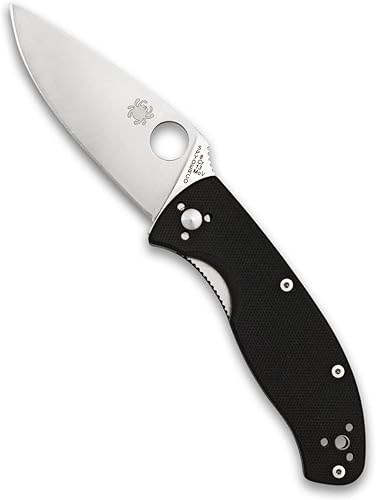
Spyderco Tenacious G-10
★ Our PickThe Tenacious is Spyderco’s entry into the serious knife market – and you notice immediately. Full G-10 handle scales, a liner lock in stainless steel, a full-flat grind that actually cuts. For ~€85, you get more knife here than some people pay €120 for.
# Strengths
G-10 handle scales: Fibreglass-reinforced polymer – light, grippy, moisture-resistant, virtually indestructible. No wood that swells. No metal that gets cold. G-10 works equally well in rain, cold, and dirty hands.
Full-flat grind: Most budget knives have a hollow grind or no consistent grind at all. The Tenacious has a full-flat grind – the blade runs evenly from the spine down to the edge. This produces a thinner edge, better cutting properties, and easier sharpening.
Liner lock: Robust, simple to use, self-locking. The Tenacious’s liner lock sits firmly and doesn’t give way unintentionally – important during forceful cutting tasks.
Spyderco hole: The characteristic thumb hole in the blade enables secure, controlled one-hand opening. Important for anyone who needs to open a knife with one hand occupied.
Spine jimping: The Tenacious has serrations on the blade spine that act as a thumb rest during precision work. Sounds like a detail – makes a practical difference.
# Weaknesses
8Cr13MoV – not the best steel: Chinese stainless at HRC ~58–60 – not poor performance for the price, but 12C27 (Opinel) and 14C28N (Kershaw) beat it slightly in edge retention. The Tenacious needs slightly more frequent sharpening than the competition.
128 g – heaviest in this comparison: Noticeable in a trouser pocket. Anyone wanting the lightest possible knife should factor in the weight.
One-hand knife → §42a applies: The Spyderco hole enables one-hand opening – making the Tenacious a one-hand knife under German weapons law. Public carry without a legitimate reason (e.g. camping, outdoor activities, work) is prohibited.
Clip not reversible: The pocket clip is fixed on one side. Left-handers or those who prefer a different orientation have no adjustment option without modification.
# Tenacious vs. Kershaw Leek – Direct Comparison
| Feature | Spyderco Tenacious | Kershaw Leek | Winner |
|---|---|---|---|
| Blade steel | 8Cr13MoV | 14C28N | Leek |
| Blade length | 8.6 cm | 7.6 cm | Tenacious |
| Weight | 128 g | 62 g | Leek |
| Lock | Liner Lock | Frame Lock | Similar |
| Handle material | G-10 | Stainless steel | Tenacious |
| Blade geometry | Full-flat | Flat | Tenacious |
| Price | ~€85 | ~€120 | Tenacious |
# Who Is It For?
The Tenacious is the best choice for anyone who wants a serious EDC knife for outdoor use, camping, and daily tasks – and who is aware of the legal situation for one-hand knives in Germany. For regular outdoor use, on hikes, camping, or in the workshop: hard to beat at this price.
# Kershaw Leek – The Slimmest Knife in the Comparison

Kershaw Leek
The Kershaw Leek takes a different approach from all the others here: maximum slimness at genuine quality. 62 grams. An open length of 17 cm. Frame lock from the handle frame itself. This is the knife for anyone who doesn’t want to feel a knife on them – but still wants a good one.
# Strengths
14C28N Sandvik steel: A quality steel developed by Sandvik for OEM knives. Similar to 12C27 (Opinel) but harder heat treatment – edge retention better than 8Cr13MoV. For a sub-€70 knife, an excellent steel choice.
62 g – the lightweight: The Leek is exceptionally light for its blade length. This enables clip carry with no sense of weight – the knife you forget you’re carrying.
SpeedSafe mechanism: Kershaw’s own spring mechanism opens the blade with a light push on the thumbstud – instantly. No force required, no fumbling. For anyone who needs a knife quickly in operation.
Frame lock – robust locking system: The frame lock comes from the handle frame itself – a large contact piece that holds up better under load than a liner lock. More stable during forceful cutting tasks.
Flat profile: The Leek lies flat in a trouser pocket. No bulge, no visibility through thin fabric – it disappears.
# Weaknesses
Slender tip breaks easily: This is the most-cited criticism of the Leek: the thin, pointed blade geometry makes the knife agile but fragile at the tip. When levering, opening tins, or rough work, the tip goes faster than on more robust knives. The Leek is not a tool for rough work.
SpeedSafe → §42a applies: The spring assist makes the Leek definitively a one-hand knife. Public carry in Germany without a legitimate reason is not permitted.
Not for rough tasks: The Leek is designed for precise, clean cuts – not for stripping branches, cutting through cardboard, or as a lever tool. Anyone needing a tougher knife should go with the Tenacious.
No cord loop or attachment point: No fastening point for paracord or a carabiner. Clip carry only.
# Leek vs. Pioneer Alox – Direct Comparison
| Feature | Kershaw Leek | Pioneer Alox | Winner |
|---|---|---|---|
| Weight | 62 g | 83 g | Leek |
| Blade steel | 14C28N | 1.4116 | Leek |
| Blade length | 7.6 cm | 6.4 cm | Leek |
| One-hand opening | ✓ (SpeedSafe) | – | Leek |
| Lock | Frame Lock | Slip Joint | Leek |
| Extra tools | – | 7 | Pioneer |
| Legal status (DE) | §42a applies | Unrestricted | Pioneer |
| Price | ~€120 | ~€24 | Pioneer |
# Who Is It For?
The Kershaw Leek is the best knife for anyone who wants a precise, lightweight everyday knife – in the city, at the office, travelling. Anyone who uses a knife as a fine tool (packages, fruit, threads, precision tasks) will love the slimness. Anyone needing a knife for rough outdoor work is better off with the Tenacious.
# Which Knife for Which Purpose?
| Use Case | Recommendation | Why |
|---|---|---|
| City EDC / everyday carry | Kershaw Leek | Lightest, slimmest, barely noticeable |
| Outdoor & camping | Spyderco Tenacious | Most robust build, best cutting properties |
| Emergency bag | Opinel No. 8 or Pioneer Alox | No §42a issues, robust, affordable |
| First knife / beginner | Opinel No. 8 | Best steel for €11, hard to beat |
| Multi-function / tool | Victorinox Pioneer Alox | 8 tools, can opener, legally unrestricted |
| Edge retention + value | Opinel No. 8 or Kershaw Leek | 12C27 / 14C28N outstanding for their price |
| Robustness / heavy use | Spyderco Tenacious | G-10 scales, full-flat grind, solid liner lock |
# Blade Maintenance: Sharpening and Care
A pocket knife is only as good as its edge. All four knives in this comparison sharpen without difficulty – the most important thing is sharpening regularly, before the blade gets truly dull.
Basic sharpening kit:
- A simple whetstone (800/2000 grit) is sufficient for all four knives
- For everyday maintenance, a pocket sharpener or ceramic rod is enough
- The Spyderco hole (Tenacious) and SpeedSafe (Leek) don’t make these knives harder to sharpen than other folders
Cleaning:
- After wet use: open, dry, add a drop of oil (Ballistol, camellia oil) to the pivot
- Let the Opinel handle dry after heavy moisture before forcing it closed
- G-10 (Tenacious) and stainless steel (Leek, Pioneer) are low-maintenance – soap and water, brush, dry
# Our Verdict
The Spyderco Tenacious is the right choice for most people who actually want to use a knife: robust liner lock, good geometry, G-10 scales, fair at €85. It’s the knife that doesn’t compromise on any detail you’ll actually need in practice.
For the best steel at the lowest price: Opinel No. 8 Inox – €11, 12C27 steel, proven across generations. No other knife in this price range cuts this well and sharpens this easily.
For a multi-tool that also works as a knife: Victorinox Pioneer Alox. Eight tools in 83 grams – and generally unproblematic under German knife law for everyday carry.
For the slimmest, lightest knife used carefully: Kershaw Leek – 62 g, 14C28N steel, SpeedSafe. For precision, not heavy work.
Which pocket knives can you legally carry in public in Germany?
Under §42a of Germany’s Weapons Act (Waffengesetz), knives that can be opened with one hand (“Einhandmesser”) may not be carried in public without a legitimate reason. This applies to knives with thumb holes (Spyderco), flipper tabs, and spring-assisted mechanisms (Kershaw SpeedSafe).
Generally unproblematic (§42a WaffG does not apply): Opinel No. 8 and Victorinox Pioneer Alox – no one-hand opening, no automatic mechanism.
§42a applies: Spyderco Tenacious (thumb hole = one-hand opening) and Kershaw Leek (SpeedSafe = assisted one-hand opening). These knives may not be carried in public without a legitimate reason. For camping, hiking, on the way to outdoor activities, or for occupational use: no problem.
What's the difference between a pocket knife and a multitool?
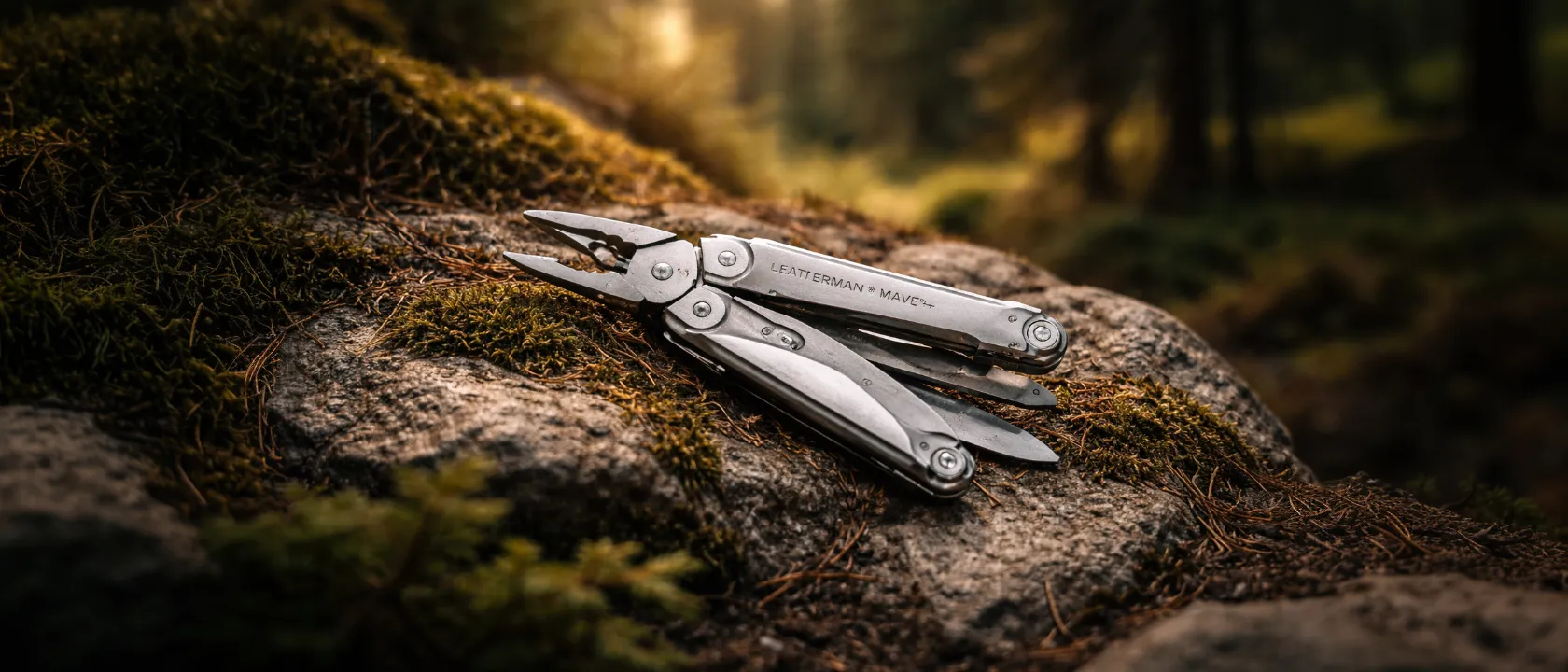
A pocket knife has a folding blade as its primary tool. A multitool (like the Leatherman Wave+) is built around a pair of pliers with blades and tools added.
The Victorinox Pioneer Alox sits in between – it has a blade as the primary tool, but also a can opener, screwdriver, and awl. Classically it’s called a “Swiss Army Knife.”
For an emergency bag or EDC setup: a knife for cutting tasks, a multitool for everything else – or the Pioneer Alox as the compromise.
Is it worth spending more than €50 on a pocket knife?
Yes – but the jump from €11 to €85 is bigger than from €85 to €150. The Opinel No. 8 at €11 offers excellent steel. The Spyderco Tenacious at €85 offers significantly more robust construction and better overall geometry. Above €100–150 (e.g. Benchmade Bugout, Spyderco Para 3), steel quality and manufacturing precision improve – the difference from a good €85 knife is real, but rarely decisive in everyday use.
Which knife is easiest to sharpen?
All four knives in this comparison sharpen without difficulty. Particularly sharpening-friendly: Opinel No. 8 (12C27 is very easy to sharpen due to its lower hardness) and Kershaw Leek (14C28N similar). The Tenacious needs slightly more patience, but the full-flat grind is actually easier to maintain consistently than a hollow grind.
Can I use the Opinel No. 8 in the kitchen?
Yes – the Opinel No. 8 is one of the best kitchen knives in its price class. In France, it’s traditionally also a table knife. The 8.5 cm blade length is ideal for vegetables, cheese, charcuterie, and bread. One limitation: not for poultry or bone work, as the blade isn’t robust enough for that.
What's the better choice for an emergency bag: Opinel or Victorinox Pioneer Alox?
Both are legal and reliable. For the emergency bag: the Pioneer Alox is more versatile (can opener, screwdriver, awl), the Opinel cuts better and is easier to sharpen. Ideally: both – the Opinel costs €11. More on emergency kit: → Home Emergency Plan