A home emergency plan isn’t an exercise for disaster movies. It answers concrete questions: Where do you meet if the phones don’t work? What do you do in the first 72 hours without power and water? Who has which documents, and where are they?
It takes one afternoon. It costs almost nothing. And the difference from having no plan at all is enormous.
# What Actually Happens?
Before you start planning, it’s worth pausing to ask: what are you actually planning for?
The most common scenarios, by likelihood:
Power outage (1–72 hours): From storms, technical failures, or grid overload. This happens regularly. Refrigerator, heating pump, lights, phone charging – all out.
Water supply failure or contamination: Pipe bursts, flooding, chemical incidents. Less common than power outages, but more critical when it happens. Cooking, drinking, toilets – all affected.
Extreme weather: Blizzards, storm surges, heat waves. Increasingly frequent. Could mean days unable to leave the house or no accessible supermarket.
Illness or injury at home: Someone in the household is incapacitated. Not a disaster in itself, but without supplies, first aid, and a plan, even a routine situation becomes stressful.
Evacuation: House fire, gas leak, nearby chemical incident. No time to wait, no time to think. You need to be out in minutes.
We’re building the plan for these five scenarios.
# Step 1: Communication Plan
The most commonly forgotten part. Communication breaks down first in emergencies – mobile networks get overloaded, batteries die, nobody knows where anyone else is.
Establish two meeting points:
- One near the house (e.g. the large tree outside, the car park across the street) – for house fires and quick evacuations.
- One outside the neighbourhood (e.g. at relatives, at a well-known location in the city) – for larger events.
Everyone in the household must know both addresses by heart. Include children.
Designate an out-of-area contact: One person outside your city who acts as a communication hub. Locally overloaded networks can often still be reached from further away. Everyone calls this person briefly: “I’m okay, I’m at [meeting point].”
Write down phone numbers – don’t just save them on your phone. Phone broken, stolen, or flat: all numbers gone. A handwritten or printed list with the essential numbers (family, emergency services, pharmacy, neighbour) belongs in a drawer.
Keep a radio: A battery-powered or hand-crank FM radio is the only reliable information source during a power outage. Authorities broadcast situation updates over public radio when other channels fail. Which models are worth it: → Emergency Radio Comparison
# Step 2: 72-Hour Supplies
Most emergency agencies recommend 10 days of supplies. A realistic starting point is 72 hours – that covers the most common events and can be built up without much effort.
# Water
At least 2 litres per person per day, ideally 3. For a family of four, that’s 24–36 litres for 72 hours. Standard 1.5-litre bottles work fine. For longer-term storage: food-grade screw-top containers (5–10 L) filled from the tap.
More on this: → How to Build a Water Supply
For cases where stored water runs out or you need to purify water from an unknown source:
 Sawyer Squeeze SP129~40 €View →
 Katadyn Micropur Forte MF 1T~25 €View →
The Sawyer Squeeze mechanically filters bacteria and protozoa – no consumables needed. Micropur Forte tablets (chlorine dioxide) are ideal for a backpack and as a backup.
# Food
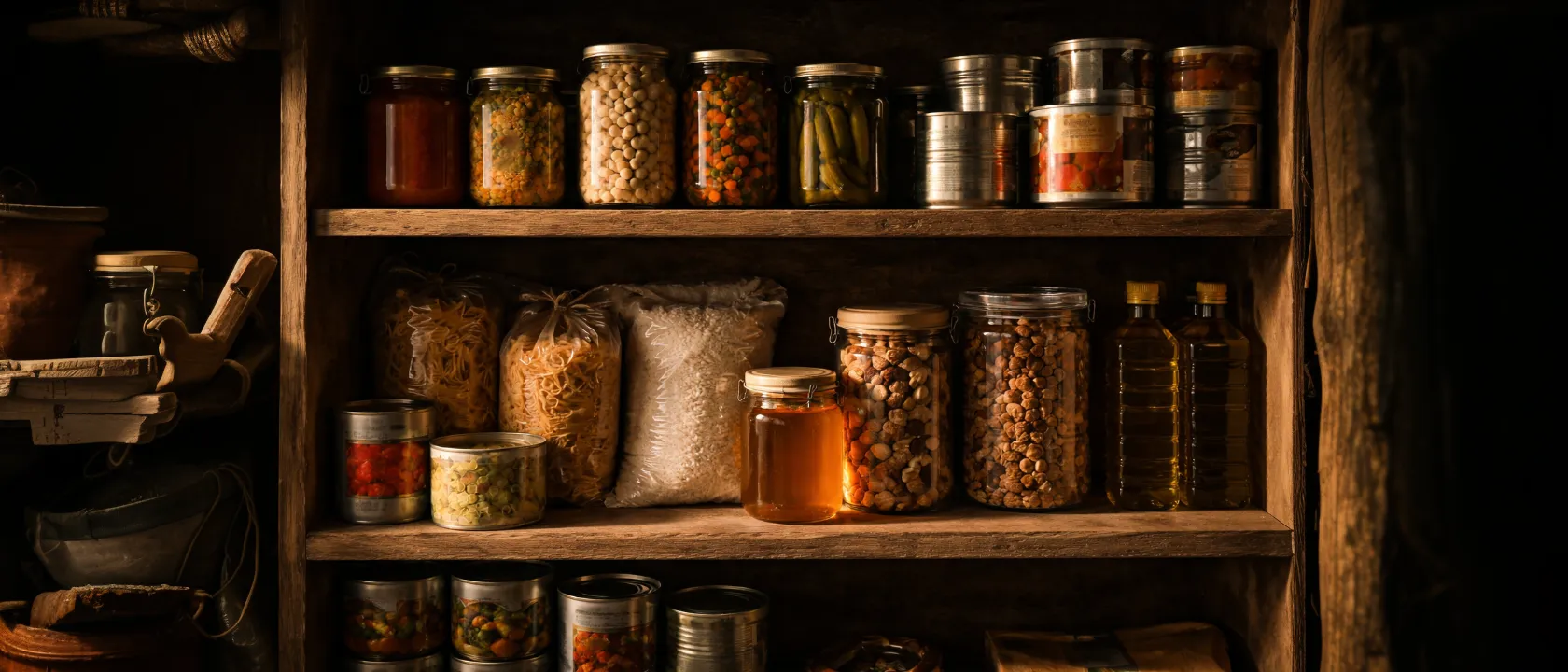
No specialist meals required. What counts: shelf-stable, minimal cooking required (or easy to prepare), calorically sufficient. Exact quantities by time horizon and shopping lists: → Building a Food Supply: 72 Hours to 3 Months Reliable basics:
- Pasta, rice, couscous (short cooking time, high calorie density)
- Tins (pulses, tuna, tomatoes, soups)
- Crispbread, nuts, cereal bars
- Peanut butter, honey, crackers
- Instant coffee, tea, chocolate (morale matters)
Rotate: keep an eye on expiry dates and swap stock regularly.
# Light
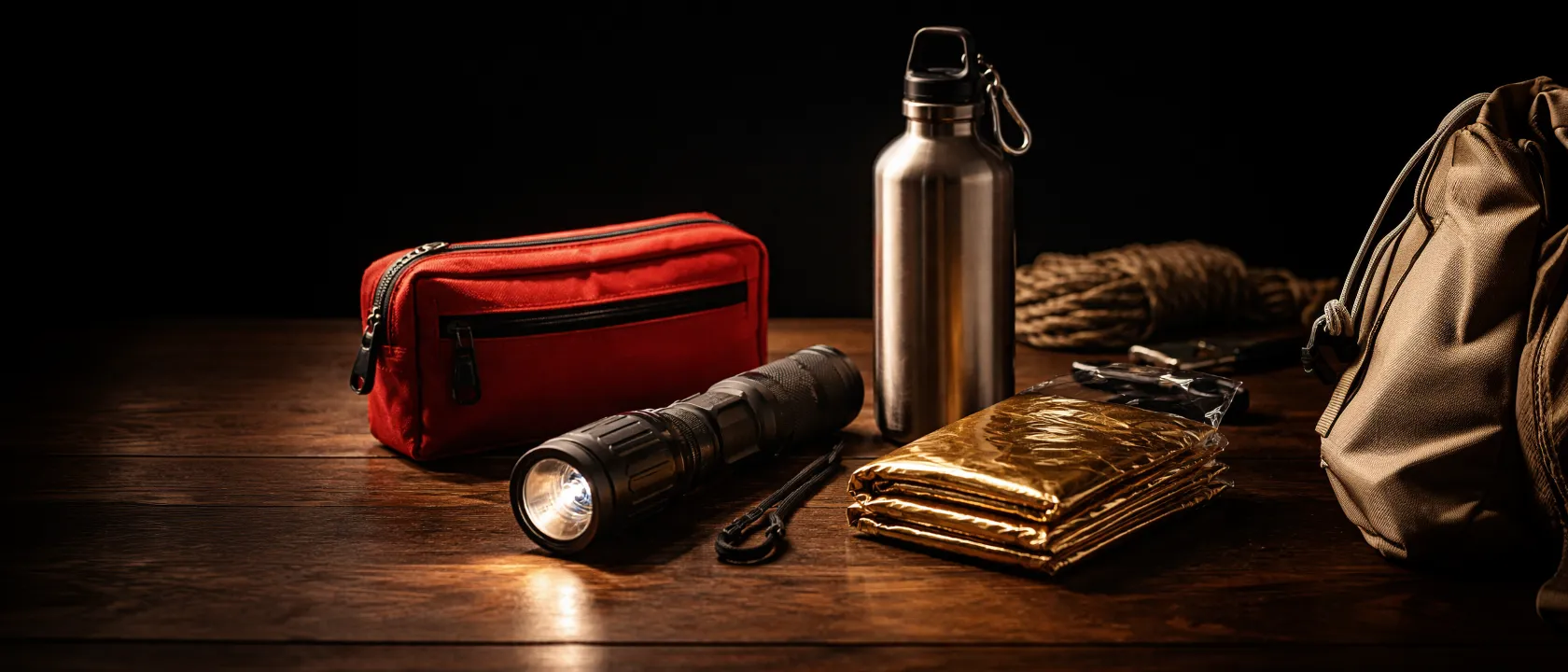
A power outage at night is a fundamentally different situation from one during the day. At least one good torch per household – plus a headlamp, so both hands stay free. Recommended models: → Flashlights for Preparedness & Emergencies

Wuben C3

Petzl Tikkina
# First Aid
A complete kit that includes wound care – not the plastic box from the supermarket. What matters: bandages, pressure dressings, emergency blanket, painkillers, activated charcoal, tweezers, scissors.
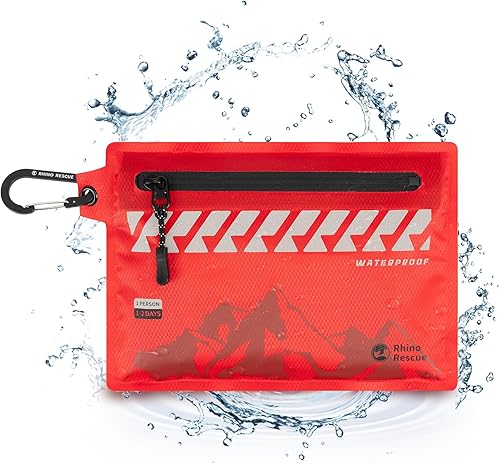
Rhino Rescue Erste-Hilfe-Set
What belongs in a good kit: → The Perfect First Aid Kit
# Other Basics
- Cash in small notes: Card payments don’t work during a power outage. €100–200 in small notes covers most scenarios.
- Medications: At least a 2-week supply of any regular prescriptions.
- Hygiene: Toilet paper, hand sanitiser, and any personal hygiene items needed.
- Warmth: Wool blankets, emergency blankets. Especially important if the heating pump runs on electricity.
- Tools: Multitool or pocket knife, can opener, duct tape.
# Step 3: Secure Your Documents
In an emergency – especially an evacuation – you need documents faster than you’d expect. Anyone who doesn’t have them to hand loses valuable time or ends up without critical paperwork.
What should be secured:
- ID card, passport (originals)
- Birth certificates, marriage certificate
- Health insurance card and key medical records (blood type, allergies, vaccination record)
- Insurance policies (home, liability, car, health, life)
- Bank documents, important contracts
- Powers of attorney and will
Make two copies:
- One in a fireproof box or a sturdy clear folder in your emergency bag
- One digitally (encrypted, cloud or USB stick)
# Step 4: Evacuation Plan
When the word comes “you need to leave now” – what happens? Who packs what, who looks after whom, what do you take?
Everyone has their own bag: Ideally, every adult in the household has a packed emergency bag ready to grab immediately. Children from around age 6–8 can carry a small backpack with their own water, snacks, and a torch – giving them a degree of agency in an emergency situation. Younger children carry nothing, but their essentials are pre-packed in an adult’s bag.
What goes in and how to pack it: → Emergency Bag Packing: What Really Goes In
Define the procedure: Who looks after small children or pets? Who turns off what (gas tap, electricity)? This sounds trivial but isn’t – under stress even the obvious things get forgotten.
Know two escape routes: At least two ways to leave the house. Especially important in a fire.
Meeting point: Where do you meet if you get separated leaving the house? (→ Step 1)
# Step 5: Go Through the Plan With Your Household
A plan only one person knows isn’t a plan. All household members need to know what to do.
- Go through the plan together once – not theoretically, but concretely: “If there’s a fire right now, what do you do?”
- Show the meeting points, don’t just describe them
- With children: calm and matter-of-fact. No drama, no fear – a drill, like a fire plan at school
- Write the plan down and put it somewhere visible (e.g. inside a kitchen cupboard)
# Emergency Plan Template
Print this out and fill it in. One page, on the wall or in a drawer:
OUR EMERGENCY PLAN
=====================================
Date: _______________

MEETING POINTS
Meeting point 1 (nearby): _______________
Meeting point 2 (further): _______________

OUT-OF-AREA EMERGENCY CONTACT
Name: _______________
Number: _______________

IMPORTANT NUMBERS
Emergency services: 112
Police: 110
Poison Control: (local number)
GP: _______________
Pharmacy: _______________
Neighbour: _______________
Relatives: _______________

GAS shutoff (location): _______________
ELECTRICITY / fuse box (location): _______________
EMERGENCY BAG location: _______________
DOCUMENTS location: _______________
WATER SUPPLY (location): _______________

SPECIAL NOTES
Medications (who needs what): _______________
Pets (animal, supplies location): _______________
Other: _______________
# What You DON’T Need
Preparedness has a paranoia problem. What you definitely don’t need for a solid baseline plan:
No bunker. You’re preparing for 72 hours to 10 days, not the apocalypse. A stocked cupboard is enough.
No years of supplies to start. Begin with 72 hours. Then expand gradually if you want to.
No gas masks. Unless you live directly next to a chemical plant. For everyone else: a waste of money.
No weapons. Developed countries don’t turn into warzones in emergencies. Arming up increases risk to your own household more than it reduces it.
No high-end gear first. A €25 torch and a filled water bottle are more effective than an empty €200 backpack.
# Now What?
Start this afternoon. Not “soon”. Not “when I have more time”.
Order by impact:
- Write down phone numbers and set meeting points – 20 minutes
- Build a water supply – one afternoon
- Put together an emergency bag – one afternoon
- Copy and secure documents – one evening
- Go through the plan with your household – 30 minutes
More on each step:
- → How to Build a Water Supply
- → Emergency Bag Packing
- → The Perfect First Aid Kit
- → Preparedness for Beginners: Where Do I Start?
How long should my supplies last?
Most agencies recommend 10 days. Start with 72 hours – that covers the most common scenarios (storms, power failures, water outages). With 72 hours of supplies you’re already better prepared than most households.
What do I do during a multi-day winter power outage?
Heating (gas boiler needs electricity), hot water, light – all out. Key: wool blankets, warm clothing, candles used carefully. If it gets too cold indoors (below about 10°C), go to a community warming centre – local authorities set these up for extended blackouts. A radio keeps you updated.
Does the emergency plan have to be registered anywhere?
No. It’s a private plan for your household. Nothing needs to be registered. Making the plan known to all household members is all that matters.
What if I live alone?
Then the out-of-area contact is especially important – someone who knows where you are in an emergency. I’d also recommend: a good relationship with at least one neighbour. Mutual support in crises works better than going it alone.
Should I tell children about the emergency plan?
Yes – calmly and without drama. Children already know that accidents and storms happen. A clear plan reassures more than it frightens. Walk through meeting points together, show them meeting point 2, have them memorise the key number. No disaster framing needed.
What's the difference between an emergency plan and an emergency bag?
The emergency plan covers: who does what, where do we meet, who do we call. The emergency bag is what you take if you have to leave the house. Both complement each other – but the plan comes first, because it applies even without a bag.