Drinking water is the most essential resource in an emergency. You can survive weeks without food, but only days without water. This guide will help you build a practical water storage system at home.
# How Much Water Do You Need?
The standard recommendation is 2 liters per person per day. This accounts for drinking and basic hygiene. For a household of four, that’s 8 liters daily.
For a practical emergency supply, aim for a 10-day reserve. This covers most common scenarios (extended power outages, supply chain disruptions, water main breaks). For a family of four, that means storing approximately 160 liters (42 gallons).
If you have limited space, start with 3-5 days and expand gradually. Something is better than nothing.
# Container Types
# Best Options
HDPE Plastic Canisters
- Food-grade HDPE (high-density polyethylene) is ideal
- Often come in 5-liter or 20-liter sizes
- Durable, reusable, and stackable
- Easy to rotate and use
PET Plastic Bottles
- Standard bottled water containers
- Lightweight and portable
- Smaller sizes (0.5-2L) are convenient for grab-and-go
- Stock commercial bottled water or refill food-grade bottles
Glass Containers
- Inert and doesn’t degrade
- Takes more space and is heavier
- Use if you have room and want maximum longevity
# What to Avoid
- Containers that previously held chemicals or pesticides
- Milk jugs or thin plastic bottles (deteriorate quickly)
- Containers without tight seals
- Clear containers exposed to light (promote algae growth)
# Proper Storage
# Location Matters
- Cool and dark: Store in a basement, closet, or pantry away from direct sunlight. Heat and light degrade containers and promote bacterial growth.
- Off the floor: Use shelves or pallets to prevent moisture damage and pest contact.
- Away from chemicals: Keep water far from cleaning supplies, gasoline, pesticides, or paint thinners. Fumes can contaminate containers through plastic.
- Stable temperature: Avoid extreme heat or freezing. Ideal range is 50-70°F (10-21°C).
# Rotation and Maintenance
If using municipal tap water:
- Fill containers with fresh tap water
- Replace completely every 6 months (or annually if stored in optimal conditions)
- Label containers with the fill date
- Rotate older supplies into regular use and refill
Commercial bottled water lasts longer (often 2-3 years) and requires less active rotation.
# When Your Water Supply Runs Out
Even with storage, it’s wise to have backup methods: portable water filters, purification tablets, and boiling.
 Sawyer Squeeze SP129~40 €View →
  Katadyn Micropur Forte MF 1T~25 €View →
A portable filter like the Sawyer Squeeze removes 99.99% of bacteria and protozoa from rainwater, streams, or ponds. Purification tablets (such as Micropur Forte) are an ideal backup: compact, affordable, and shelf-stable for years. For situations where you also need to remove viruses and chemicals, a purifier like the GRAYL GeoPress is the way to go.
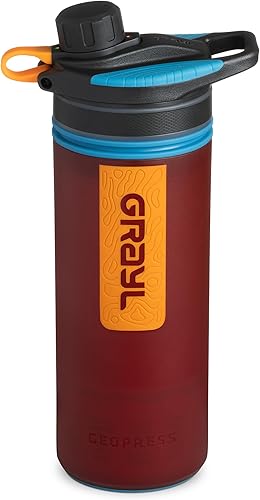 GRAYL GeoPress 710 ml~95 €View →
And the simplest method: boiling water for one minute kills most pathogens, though it requires fuel and a heat-safe container (a single-wall stainless steel bottle works in a pinch). For a detailed breakdown of each method, see our guide on how to purify water.
# Conclusion
A practical water storage system doesn’t require elaborate planning or large space. Start with a 10-day supply in food-grade containers, store them in a cool dark place away from chemicals, and rotate every 6 months. Add backup methods like a filter or purification tablets for extra security. Which filter is right for you? See our Water Filter Comparison.
Your water storage is one of the most important steps you can take toward household resilience. The next steps: build a food supply and put together a home emergency plan that covers communication, evacuation, and documents.