Clean drinking water is the foundation of any preparedness plan. In developed countries, the water supply works reliably – until it doesn’t. Flooding, pipe breaks, power outages, or contaminated mains can change that within hours. If you’re out in the wild, on multi-day hikes, or traveling internationally, the question is even more immediate: how do I make this water safe to drink?
The good news: with the right methods and gear, almost any water can be made safe – whether from streams, lakes, rainwater, or a questionable tap. This article covers the four key methods, explains the critical difference between filters and purifiers, and presents gear for every scenario – from ultralight trail filters to high-capacity home systems for emergency preparedness. Beyond purification, it’s also worth keeping a water supply at home as your first line of defense.
# What’s in the Water?
Before you purify water, it helps to understand what you’re protecting against:
Bacteria (e.g., E. coli, Salmonella, Cholera) are the most common threat in surface water worldwide. They cause diarrhea, vomiting, and can become life-threatening. Size: 0.2–5 micrometers. Removed by all standard filters.
Protozoa (e.g., Giardia, Cryptosporidium) are single-celled parasites that cause persistent gastrointestinal infections. Especially tricky: Cryptosporidium cysts are resistant to chlorine. Size: 1–15 micrometers. Reliably removed by filters and boiling.
Viruses (e.g., Norovirus, Hepatitis A, Rotavirus) at 0.02–0.3 micrometers are too small for most filters. In Europe and North America, virus contamination in surface water is minimal. In regions with poor sanitation (Southeast Asia, Africa, parts of South America), it’s a serious risk. Removed by UV, chlorine dioxide, or purifiers (GRAYL).
Chemicals and heavy metals (pesticides, lead, mercury) occur near agricultural areas and industrial sites. Most filters don’t remove them – only activated carbon combinations and purifiers like the GRAYL GeoPress do.
# Filter vs. Purifier: The Critical Difference
This distinction is fundamental and often misunderstood: filters and purifiers are not the same thing.
Filters (e.g., Sawyer Squeeze, Katadyn BeFree, LifeStraw) use hollow fiber membranes with pore sizes of 0.1–0.2 micrometers. They physically remove everything larger than their pores: bacteria, protozoa, sediment, microplastics. What they can’t do: viruses (0.02–0.3 µm) pass right through, and dissolved chemicals or heavy metals remain in the water. For Europe and North America, where virus contamination in surface water is minimal, a filter is sufficient in the vast majority of cases.
Purifiers (e.g., GRAYL GeoPress) combine multiple technologies: hollow fibers, activated carbon, and sometimes ionic adsorption. This allows them to additionally remove viruses, chemicals (pesticides, chlorine, PFAS), heavy metals (lead, arsenic, mercury), and taste compounds. A purifier can make virtually any water source worldwide safe to drink – even where sanitation is poor or industrial contamination is present.
When do you need which?
A filter is enough for hiking in Europe and North America, where the main threats are bacteria and protozoa from animal waste. You need a purifier for international travel (Southeast Asia, Africa, South America), questionable tap water sources, areas near industrial or agricultural contamination, and as a home preparedness solution – because in a crisis, you don’t know what’s in your water.
# Method 1: Boiling
The oldest and most reliable method. A rolling boil for 1 minute kills bacteria, viruses, and protozoa – including chlorine-resistant Cryptosporidium. At high altitudes (above 6,500 ft / 2,000 m), boil for 3 minutes as water boils below 100°C at lower pressure.
Pros: No special equipment needed, kills all biological contaminants, always works.
Cons: Doesn’t remove chemical contaminants or heavy metals, requires fuel and cooling time, impractical on the move.
When to use: In camp with a stove or fire. As your baseline method when you don’t have a filter. As backup when your filter fails.
Practical tip: Pre-filter turbid water through a cloth or bandana before boiling. This removes particles and improves taste and effectiveness.
# Method 2: Water Filters
Modern water filters use hollow fiber membranes with pore sizes of 0.1–0.2 micrometers. They physically remove bacteria and protozoa from water – instantly, without waiting, without chemical taste. As explained in the Filter vs. Purifier section, standard filters don’t remove viruses – fine for Europe and North America, but for international travel and preparedness you need a purifier or a combination of filter and chemical treatment.
Top models at a glance:

Sawyer Squeeze SP129
The Sawyer Squeeze is the most widely used outdoor water filter worldwide. At 3 oz (85 g) extremely light, with a filter capacity of 100,000 gallons and backflushable. Its 0.1-micron filter removes 99.99999% of bacteria. The all-rounder for anyone looking for a reliable, affordable filter.

Katadyn BeFree 1.0L
The Katadyn BeFree at 2.3 oz (63 g) is the lightest serious filter on the market. Its flow rate of 2 liters per minute is the fastest in this comparison – ideal for groups and anyone who doesn’t want to squeeze hard. Filter capacity: 264 gallons (1,000 liters).

LifeStraw Peak Series Squeeze 650 ml
The LifeStraw Peak Squeeze combines filter and collapsible 650 ml bottle in one system. At 3.6 oz (102 g) barely heavier than the Sawyer, but more compact when packed. Also filters microplastics. Ideal for trail runners.
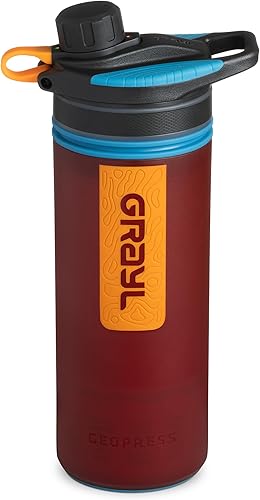
GRAYL GeoPress 710 ml
The GRAYL GeoPress isn’t a filter – it’s a full purifier: it removes bacteria, protozoa, viruses, chemicals, and heavy metals – all in one press. 24 oz (710 ml) of clean water in about 8 seconds. An often overlooked advantage: the GeoPress doubles as a sturdy drinking bottle. You save the weight of carrying a separate bottle, which significantly offsets its 15.9 oz (450 g). The top choice for international travel, emergency preparedness, and anyone who wants an all-in-one solution.
For a detailed head-to-head of all four models, see our Water Filter Comparison.
Pros: Ready to use immediately, no fuel needed, no chemical taste, light and compact.
Cons: Most models don’t remove viruses, require maintenance (backflushing/swirling), vulnerable to freezing.
Practical tip: In winter, always carry your filter close to your body (jacket pocket, sleeping bag). A frozen hollow fiber filter is potentially destroyed and no longer safe.
# Method 3: Chemical Treatment
Purification tablets use chlorine dioxide, chlorine, or sodium hypochlorite to kill microorganisms in water. They’re the ultimate backup: ultralight, cheap, virtually unlimited shelf life.

Katadyn Micropur Forte MF 1T
Micropur Forte (chlorine dioxide) is the gold standard among purification tablets. Unlike simple chlorine tablets, chlorine dioxide also works against protozoa like Giardia – though with a longer contact time.
How to use:
- Pre-filter water (through cloth or coffee filter) to remove particles
- Add one tablet per liter of water
- Wait 30 minutes for protection against bacteria and viruses
- Wait 2 hours for complete protection including protozoa
- Done – the water is safe to drink
Pros: Extremely light and compact, works against bacteria, viruses and protozoa, cheap, ideal as backup.
Cons: Long contact time (30–120 minutes), slight chemical taste, doesn’t remove particles or chemicals, slower in very cold water (extend contact time).
When to use: As backup to your filter, in emergency kits, when quick filtering isn’t possible.
# Method 4: UV Treatment
UV devices like the SteriPen irradiate water with ultraviolet light (UV-C, 254 nm) and destroy the DNA of bacteria, viruses, and protozoa. Half a liter is disinfected in 60–90 seconds.
Pros: Very fast, no chemical taste, works against viruses (only method besides purifiers and tablets), no contact time.
Cons: Requires batteries or rechargeable battery, only works in clear water (pre-filter turbid water), fragile electronic device, no particle removal.
When to use: As a complement to your filter for virus protection, on trips to regions with poor water quality.
Practical tip: UV disinfection only works if the water is clear. Particles in the water cast shadows where pathogens survive. Always pre-filter turbid water.
# Larger Systems for Preparedness and Groups
The filters covered above are optimized for portability – light, compact, designed for one to a few people. For home preparedness, groups, or when larger volumes need to be processed, there are more capable systems:
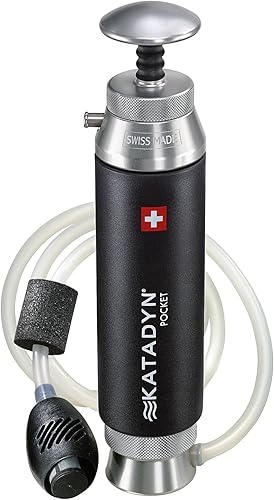
Katadyn Pocket Wasserfilter
The Katadyn Pocket is the gold standard among rugged portable filters. Its ceramic filter element (0.2 µm) lasts up to 13,000 gallons (50,000 liters) – enough for a family over many years. At 19.4 oz (550 g) heavier than the ultralight models, but virtually indestructible. The ceramic element can be cleaned by rubbing it down when flow rate decreases. The standard-issue filter for aid organizations and military worldwide for decades.
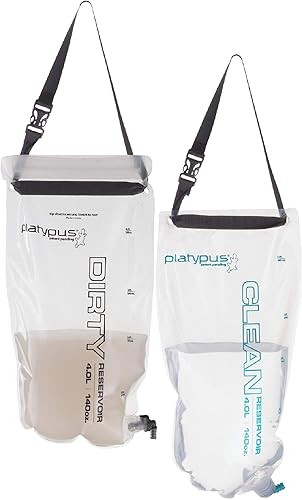
Platypus GravityWorks 4L
The Platypus GravityWorks 4L simply hangs from a tree or hook – water flows through the 0.2-micron hollow fiber filter by gravity alone, no pumping or squeezing required. Ideal for groups and base camps: fill the reservoir, hang it up, and have 4 liters of clean water in minutes. Also practical for home preparedness since no electricity or effort is required.

Katadyn Drip Ceradyn Tropffilter
The Katadyn Drip Ceradyn uses the gravity principle with three large ceramic filter candles. It filters 2–4 liters per hour and is designed for continuous home use. Capacity per candle: ~13,000 gallons (50,000 liters). No electronics, no electricity, no consumable parts besides the candles. The most sensible solution for households that want to produce clean drinking water off-grid.
What matters for preparedness? The key is combining methods: a high-capacity filter (ceramic or hollow fiber) for bacteria and protozoa, plus a purifier or chemical treatment for viruses and chemicals. Additionally, stock Micropur Forte tablets – they work even when everything else fails.
# Which Method When?
| Situation | Recommendation |
|---|---|
| In camp with stove | Boiling (baseline method) |
| Day hike (Europe/NA) | Sawyer Squeeze or Katadyn BeFree |
| Ultralight thru-hiking | Sawyer Squeeze + Micropur as backup |
| Trail running | LifeStraw Peak Squeeze |
| International travel | GRAYL GeoPress (purifier + drinking bottle in one) |
| Home preparedness (1–2 people) | Water storage + Sawyer Squeeze + Micropur Forte |
| Home preparedness (family) | Ceramic drip filter (Katadyn Drip) + Micropur Forte |
| Groups / base camp | Gravity filter (Platypus GravityWorks) or Katadyn Pocket |
| Long-term self-sufficiency | Katadyn Pocket (50,000 L) + Micropur as backup |
# Pro Tip: Combine Methods
For maximum safety, combine two methods: the filter removes particles, bacteria, and protozoa. The second method (tablets or UV) eliminates viruses. This combination provides reliable protection in every scenario – and together weighs less than 5 oz (150 g).
Recommended combo setup for thru-hikers:
- Sawyer Squeeze as main filter (bacteria + protozoa)
- Micropur Forte as backup and virus protection
- Total weight: ~4 oz (110 g)
Recommended setup for international travel:
- GRAYL GeoPress as all-in-one solution (bacteria + viruses + chemicals + drinking bottle)
- Micropur Forte as backup if the GeoPress fails
Recommended setup for home preparedness:
- Water storage for the first days (1 gallon per person per day)
- Katadyn Pocket or gravity filter as main system (long-lasting, no electricity needed)
- Micropur Forte for virus protection and backup
- Optional: GRAYL GeoPress as a mobile purifier backup for on-the-go
For a detailed comparison of the best water filters, check out our Water Filter Comparison 2026.
# Frequently Asked Questions
Can you drink rainwater directly?
In rural areas, freshly collected rainwater is often relatively clean but not sterile. Contact with roof surfaces, collection containers, or dust can introduce bacteria and contaminants. Always filter or boil to be safe.
How long does a water filter last?
It varies widely. The Sawyer Squeeze filters up to 100,000 gallons (378,000 liters), the Katadyn BeFree about 264 gallons (1,000 liters). Regular maintenance (backflushing or swirling) and protection from freezing are key. Details in our Water Filter Comparison.
What's the difference between a filter and a purifier?
A filter uses hollow fiber membranes (0.1–0.2 µm) to remove bacteria, protozoa, and particles. A purifier combines hollow fibers, activated carbon, and ionic adsorption to additionally remove viruses, chemicals, and heavy metals. In Europe and North America, a filter is sufficient. For international travel and emergency preparedness, a purifier like the GRAYL GeoPress is the safer choice.
Do water filters remove viruses?
No. Most hollow fiber filters (Sawyer, LifeStraw, Katadyn) do not remove viruses – the pores are too large. For virus protection, you need a purifier like the GRAYL GeoPress, UV treatment, or chemical treatment with chlorine dioxide (Micropur Forte).
What if my water filter freezes?
A frozen hollow fiber filter may be destroyed – ice expands the fibers and creates microscopic cracks. When in doubt, replace the filter. Prevention: store the filter in your sleeping bag at night and carry it in your jacket pocket during the day.