# Why Fishing Matters in Germany
Fishing is deeply woven into German culture. From pristine alpine lakes in Bavaria to the North Sea coastline, Germany offers exceptional opportunities for both recreational and serious anglers. The country maintains rigorous standards for fish populations and water quality, which means better catches and healthier ecosystems.
Whether you’re an expat settling in Germany, a tourist planning a fishing trip, or simply curious about German angling traditions, understanding the legal framework and available techniques is essential.
# The Fischereischein: Your Fishing License
In Germany, you need a Fischereischein (fishing license) to fish legally in most waters. This isn’t just a bureaucratic requirement—it demonstrates that you understand fish biology, water ecology, and fishing ethics.
# Why a License Exists
The Fischereischein ensures that only trained anglers access fish populations. The exam tests practical knowledge about:
- Fish species identification and biology
- Gear selection and safety
- Water ecology and conservation
- Ethical catch-and-keep practices
- Local fishing regulations
This system protects Germany’s waters and maintains sustainable fish stocks.
# Exam Structure and Requirements
The Fischereischeinprüfung (fishing license exam) consists of:
Written Component:
- 60 multiple-choice questions
- Topics: fish species (20 questions), fishing gear (20 questions), regulations and ethics (20 questions)
- You must answer at least 45 questions correctly to pass
- Duration: 90 minutes
- Available in German; some regions offer English versions
Practical Component:
- Fish identification (you must identify 6 fish species from mounted specimens)
- Knot-tying (demonstrating basic fishing knots)
- Gear assembly (setting up rod and reel correctly)
- Safety procedures
Most German regions require 30 hours of preparatory study. Many fishing clubs (Angelvereine) offer courses lasting 4-6 weeks with evening classes, making it feasible for working people.
# Costs by Federal State
The exam fee and license cost vary significantly across Germany’s 16 federal states (Bundesländer):
| State | Exam Fee | License Fee (Annual) | Total First Year |
|---|---|---|---|
| Baden-Württemberg | €60 | €35 | €95 |
| Bavaria (Bayern) | €50 | €30 | €80 |
| Berlin | €40 | €25 | €65 |
| Brandenburg | €45 | €28 | €73 |
| Bremen | €50 | €32 | €82 |
| Hamburg | €55 | €40 | €95 |
| Hesse (Hessen) | €60 | €35 | €95 |
| Lower Saxony (Niedersachsen) | €48 | €30 | €78 |
| Mecklenburg-Vorpommern | €40 | €25 | €65 |
| North Rhine-Westphalia (NRW) | €65 | €38 | €103 |
| Rhineland-Palatinate (Rheinland-Pfalz) | €55 | €32 | €87 |
| Saarland | €50 | €30 | €80 |
| Saxony (Sachsen) | €45 | €28 | €73 |
| Saxony-Anhalt (Sachsen-Anhalt) | €42 | €26 | €68 |
| Schleswig-Holstein | €50 | €30 | €80 |
| Thuringia (Thüringen) | €45 | €27 | €72 |
Note: Prices are approximate and updated annually. Many states offer youth discounts (ages 10-16) at 50-75% off. Lifetime licenses are available in most states for €250-400.
# How to Prepare and Register
- Find a course: Contact local fishing clubs or the Landesverband (state fishing association)
- Enroll: Pay the course fee (typically €80-150)
- Study: Complete 30+ hours of instruction
- Register for exam: Submit registration 2-4 weeks before your preferred exam date
- Take exam: Pass both written and practical components
- Receive license: You’ll get your Fischereischein within 1-2 weeks
The exam is offered monthly in most regions.
# Fishing Without the Exam: Tourist Permits
If you’re visiting Germany and don’t have time for the full Fischereischein, some states offer Touristenschein (tourist fishing permits):
- Valid for: 1-28 days
- Cost: €10-30 per permit
- Where to get: Local fishing shops, tourism offices, or state fisheries authorities
- Restrictions: Usually limited to certain waters and species
- Age: Most tourist permits are available from age 12+
Tourist permits are practical for a fishing vacation but don’t grant full access like the Fischereischein.
# Fishing Permits: The Gewässerkarte
Even with a Fischereischein, you need a Gewässerkarte (fishing permit for specific waters) to fish on private or club-managed waters.
- Private lakes and rivers: Contact landowners for permits (often €20-50 per day)
- Club waters: Join a local Angelverein (€50-200 annual membership) for access to maintained fishing spots
- Public waters: Some state-owned waters require permits; check with local authorities
- Duration: Day permits, weekly permits, or annual memberships available
# Finding Fishing Waters
- Local Angelvereine maintain maps of accessible waters
- Tourist information offices have fishing guides
- Online directories list public and club waters by region
- Many fishing shops have detailed local knowledge
# Fishing Techniques in Germany
Germany’s diverse waters support multiple fishing methods. Your choice depends on the water type and target species.
# Spinfishing (Spinnen)
Spinnen is the most popular technique in German freshwaters.
Equipment:
- Spinning rod: 2.1-2.7m, medium action
- Reel: Spinning reel, 3000-4000 size
- Line: 0.25-0.35mm monofilament or 0.15-0.20mm braid
- Lures: Small spinners (size 1-3), spoons, or soft plastics
Target species: Trout (Forelle), pike (Hecht), perch (Barsch), zander (Zander)
Technique:
- Cast upstream or across the current
- Retrieve with steady speed or varied pace to imitate injured baitfish
- Pause occasionally; many strikes come on the pause
- Fish deeper holes and current edges in rivers
Best season: April-October, peaks in spring and fall
Resources: Top Spinfishing Lures for German Waters →
# Bottom Fishing (Grundangeln)
Grundangeln targets bottom-dwelling species in lakes and rivers.
Equipment:
- Rod: 3.0-3.6m, strong action
- Reel: Multiplier or fixed-spool
- Line: 0.30-0.40mm monofilament
- Rig: Paternoster or running ledger with grip leads (20-60g)
- Hook: Size 6-10, baited with corn, worms, or maggots
Target species: Carp (Karpfen), catfish (Wels), bream (Brasse), pike
Technique:
- Set up near likely spots: drop-offs, vegetation, flow breaks
- Cast out and wait for bites
- Use rod rests and bite alarms
- Strike firmly when you detect a bite
- Keep gentle tension but allow line to move freely
Best season: April-October; August-September for carp
Tip: Prebaiting a spot for 2-3 days significantly increases catch rates.
# Float Fishing (Posenfischen)
Posenfischen is ideal for targeting smaller species and offering excellent sport on light gear.
Equipment:
- Rod: 3.0-4.0m, light action
- Reel: Fixed-spool or traditional Fliegenrolle
- Line: 0.15-0.20mm monofilament
- Float: Stick floats or Waggler floats, 2-4g
- Hook: Size 12-16, baited with bread, maggots, or worms
Target species: Roach (Rotauge), dace (Hasel), bleak (Ukelei), small trout
Technique:
- Set float depth to fish at mid-water or bottom
- Cast upstream and let rig drift with current
- Watch float for dips and lifts indicating bites
- Strike promptly when float submerges
Best season: Year-round; peak in spring (March-May)
Setup tip: Lighter floats (0.5-1g) give more sensitive bite detection.
# Fly Fishing (Fliegenfischen)
Fliegenfischen dominates in Germany’s mountain streams and chalk streams.
Equipment:
- Fly rod: 8-9ft, 4-6 weight
- Fly reel: Matching weight capacity
- Fly line: Floating, sink-tip, or full-sink depending on conditions
- Leader: 2-4x tippet, 6-10ft
- Flies: Dry flies (May flies, sedges), nymphs (caddis, stonefly), streamers
Target species: Brown trout (Bachforelle), grayling (Äsche), char
Technique:
- Wade upstream, keeping low
- Present fly drag-free to rising fish
- Use nymphs under the surface in faster water
- Small streams (under 5m wide) suit delicate presentations
Best season: May-October; best in morning and evening
Popular rivers: Bavarian Alps streams, Moselle River, Saar River
Beginners: Consider joining a fly fishing club for instruction; many offer guided outings.
# Sea Fishing (Meeresangeln)
Meeresangeln is available along the Baltic and North Sea coasts.
Equipment:
- Rod: 2.0-2.4m, boat or shore casting rod
- Reel: Multiplier or large spinning reel
- Line: 0.30-0.50mm monofilament or 0.20-0.30mm braid
- Lures: Metal shads (100-200g), eels, sand eels
Target species: Sea trout (Meerforelle), cod (Dorsch), plaice (Scholle), mackerel (Makrele)
Technique:
- Fish from piers, breakwaters, or charter boats
- Focus on structure: rocks, wrecks, deep channels
- Use sonar to locate fish concentrations
- Vary retrieval speed to trigger strikes
Best season: Summer (June-September) along Baltic; year-round in North Sea
Popular locations: German Baltic coast, mouths of rivers like Oder and Vistula
# Salmon Fishing (Lachsangeln)
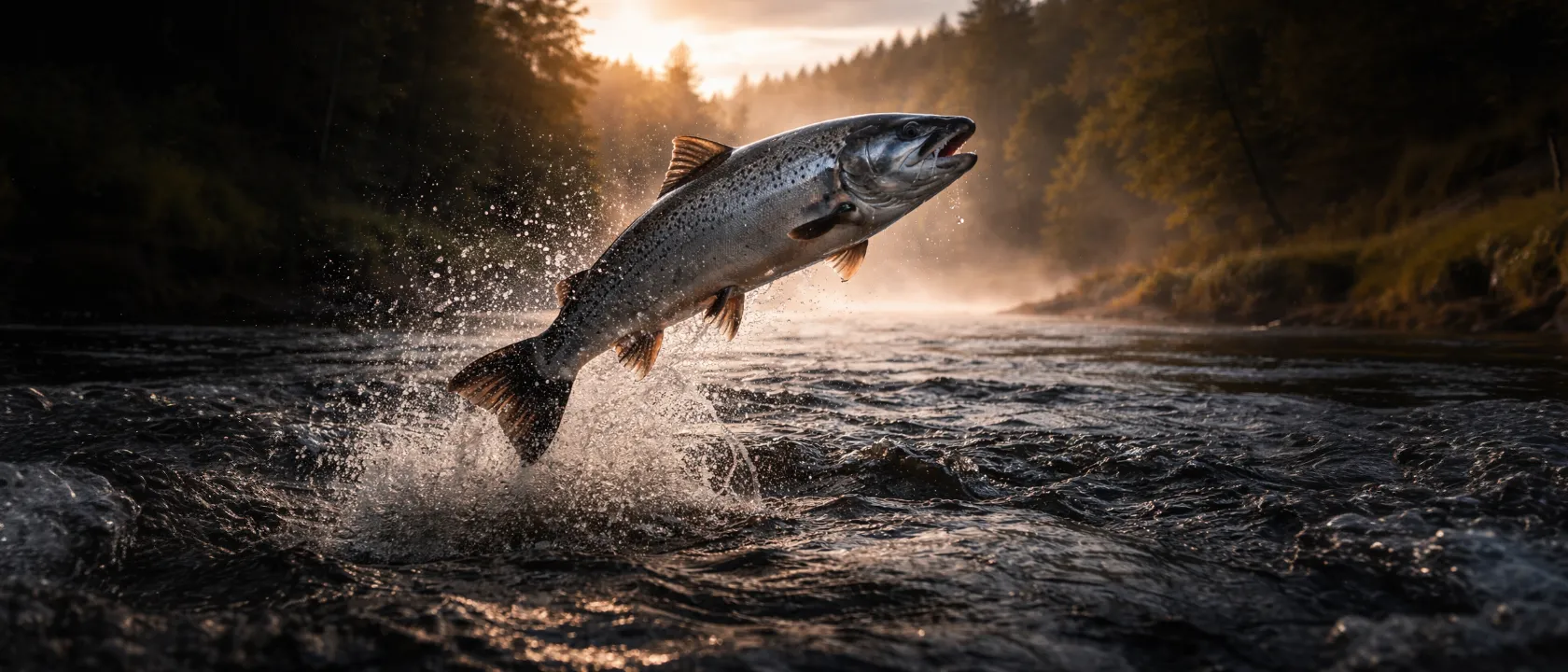
Atlantic salmon fishing in Germany has specific rules and regulations. For comprehensive guidance, see our detailed Salmon Fishing in Germany →
Quick summary:
- Inland salmon fishing is banned
- Baltic Sea salmon: strictly regulated with special gear restrictions
- Sea trout offers similar appeal with less regulation
# Catch-and-Keep Rules
Germany balances angling access with conservation. Key regulations:
Size Limits (Mindestmaße):
- Brown trout: 25cm
- Rainbow trout: 30cm
- Pike: 35cm
- Zander: 30cm
- Carp: 30cm
- Catfish (Wels): 40cm
- Sea trout: 40cm
- Salmon: 50cm (inland waters: no take allowed)
Daily Bag Limits (Tagesregeln):
- Vary by state; typically 5-10 fish per day
- Some species have stricter quotas
- Check local regulations before fishing
Closed Seasons:
- Vary by species and water type
- Generally: March (spawning protection) and December (winter spawning)
- Always confirm current closures with local authorities
How to Verify Size and Weight:
- Carry a measuring ruler (most fishing shops sell them)
- Record your catch with photos
- Use scale balances available at fishing shops or clubs
Violations result in fines (€50-500) and possible license suspension.
# Starter Gear for German Fishing
If you’re new to fishing in Germany, here’s a practical loadout to begin:
Spinning Setup (All-around choice):
- Rod: Medium-action spinning rod, 2.4m →
- Reel: Fixed-spool reel, 3000 size →
- Line: Monofilament 0.28mm, 100m spool →
- Lures: Assorted spinner set →
- Tackle box: Waterproof tackle storage →
Cost: €80-120 for basic quality
Float Fishing Setup (Budget option):
- Rod: 3.6m float rod →
- Reel: Small fixed-spool or fixed-line →
- Line: 0.18mm monofilament →
- Floats: Assorted float set →
- Hooks: Size 14-16 hook set →
Cost: €40-70
Essential Accessories:
- Fishing net (handle, not fixed) →
- Scissors and line clippers →
- Knot-tying tool →
- Measuring ruler →
- Headlamp (for evening sessions) →
Pro tip: Start with one complete setup rather than many half-finished rods. Master one technique before expanding.
# Fishing in Neighboring Countries
# Austria (Österreich)
Austria’s fishing license system mirrors Germany’s:
- Fischereischein equivalent: Fischerkarte (fishing card)
- Exam requirement: Yes, similar to Germany
- Cost: €80-120 first year
- Waters: Alpine lakes and crystal-clear rivers
- Notable species: Mountain trout, grayling, pike in lowland areas
Key difference: Austria’s mountain waters are exceptionally pristine. Plan for higher-altitude fishing with shorter seasons.
# Switzerland (Schweiz)
Swiss regulations are federal and cantonal:
- License: Cantonal permits required; no national exam in all cantons
- Cost: Varies by canton (€50-300 annually)
- Waters: Pristine alpine lakes and rivers
- Notable species: Lake trout, char, small grayling populations
- Restriction: Many alpine lakes are extremely sensitive; catch-and-release only
Key difference: Switzerland demands more conservation focus. Expect stricter regulations and lower catch numbers but exceptional water quality.
Recommendation: Hire a local guide for your first Alpine fishing experience in Austria or Switzerland; regulations and techniques vary significantly by region.
# 10 Tips for Fishing Beginners in Germany
-
Join a fishing club (Angelverein): Access private waters, learn from experienced anglers, and reduce permit costs. Most clubs charge €50-200 annually.
-
Start with spin fishing: It requires less technique than fly fishing and works in most German waters. You’ll learn effective retrieval within hours.
-
Fish the right time: Early morning (5:30-8:00 AM) and evening (6:00-dusk) produce the best results. Cloudy days beat sunny ones.
-
Respect size and bag limits: Undersized fish should be released immediately to maintain populations. Photos are more memorable than dead fish anyway.
-
Learn to read water: Current edges, submerged logs, and deeper holes hold fish. Spend time observing before casting.
-
Keep your gear maintained: Rinse reels and rods after each outing. Replace line every 10-15 fishing days; worn line loses fish.
-
Practice knot-tying: A failed knot costs you the fish. Learn the improved clinch knot, Palomar knot, and loop knots before fishing.
-
Fish with mentors: Your first trips should be alongside experienced anglers. Fishing clubs pair beginners with mentors.
-
Understand fish behavior: Fish feeding patterns depend on water temperature, light, and prey availability. A simple thermometer helps predict activity.
-
Keep detailed notes: Record location, time, weather, water conditions, and catches. Over time, patterns emerge that improve your success rate.
# FAQ: Common Questions About Fishing in Germany
Q: Do I need the Fischereischein to fish in Germany?
In most German states, yes. The exception: some tourist waters in specific regions allow fishing with a day permit. However, for reliable access, the Fischereischein is essential. It costs €65-103 total (exam + first-year license) and remains valid for life.
Q: Can I buy a used Fischereischein or take the exam online?
No to both. Your name is printed on the license, and it’s non-transferable. The exam must be taken in person at an authorized testing center. Online “fishing licenses” sold on dubious websites are scams.
Q: What’s the difference between a Fischereischein and a Gewässerkarte?
The Fischereischein proves you know how to fish responsibly. The Gewässerkarte grants you access to a specific water body. You need both: the first shows competence, the second shows permission to be there.
Q: Are there age exemptions for children?
Yes. Children under 10 can fish under adult supervision on some waters without a license. Ages 10-16 have discounted exams (50-75% off) in most states. Some club waters have junior-only sessions.
Q: What happens if I’m caught fishing without a license?
Fines start at €50 and escalate to €500+ for repeat violations. Gear confiscation is possible. In serious cases, you can face criminal charges (not just administrative fines). Enforcement is common in popular fishing areas.
Q: Can I fish with just a tourist permit all year?
No. Tourist permits are short-term (1-28 days) and often have restrictions on species or numbers. For regular fishing, the Fischereischein is necessary.
Q: Which German state has the cheapest fishing license?
Saxony-Anhalt and Mecklenburg-Vorpommern have the lowest total first-year costs (€65-68). However, exam quality and water availability vary. Don’t choose purely on price.
Q: Do German fishing clubs require membership fees?
Yes, typically €50-200 annually. This grants access to maintained waters, often around lakes and rivers. Club membership is the fastest way to find productive fishing spots.
Q: What’s the best time of year for fishing in Germany?
Spring (April-May) and fall (September-October) are peak seasons. Winter fishing is viable for pike and catfish, but requires cold-weather gear. Summer offers long daylight hours but slower midday activity.
Q: Can I fish the Rhine or Danube without special permission?
Large rivers like the Rhine and Danube have complex regulations. Some sections allow fishing with a Fischereischein alone; others require additional permits from riparian landowners. Always check local authorities before fishing.
Q: Are catch-and-release ethics expected in Germany?
Release undersized fish immediately. Respect daily bag limits. Clubs and guides expect ethical handling. Tournaments often require catch-and-release for conservation. It’s both legally required and culturally expected.
Q: How do I find the best fishing spots near me?
Start with local fishing clubs (found online or at tackle shops). Tourist information offices have maps. Websites like FishingSpots.de list public waters. Many clubs publish annual water guides.
Q: What do I do if I have an injury while fishing?
Inform a nearby angler or emergency services (112). Fishing clubs maintain first aid kits. Always carry a phone and tell someone where you’re fishing. Remote waters have rescue response times of 30+ minutes.
# Conclusion
Fishing in Germany is accessible, well-regulated, and deeply rewarding. The Fischereischein exam might seem daunting, but it ensures you fish responsibly and understand local ecosystems. The cost (€65-103 depending on state) is a one-time investment in a lifetime of fishing.
Start with a local fishing club. They’ll guide you through the exam, introduce you to productive waters, and connect you with mentors who understand German angling. Your first season may feel overwhelming, but by year two, you’ll be planning trips to Alpine streams and Baltic beaches.
Germany’s commitment to water quality and sustainable fish populations means your catch is part of a system that works. Respect the regulations, master a technique, and enjoy one of Europe’s finest fishing destinations.
Ready to begin? Find your local Landesverband (state fishing association) online, enroll in a course, and plan for your Fischereischein exam in 6-8 weeks. Your first fish is closer than you think.