During power outages, in your bug-out bag, while camping or doing repairs – a headlamp is one of the most useful light sources you can own. The decisive advantage over any flashlight: both hands stay free. Whether checking the breaker box, setting up a tent, or providing first aid – a headlamp makes you more efficient and safer.
In this comparison, we test 5 headlamps from $19 to $91: from a simple AAA model to a professional dual-beam light. If you’re looking for a regular flashlight for storage, check out our Flashlight Comparison for Preparedness. For compact EDC lights, see the EDC Flashlight Comparison.
# What Matters in a Headlamp
Power supply: The most important decision. AAA batteries (up to 10 years shelf life, available everywhere) are ideal for pure preparedness. 18650 cells offer more power and are rechargeable. Some models support both – the best solution for flexibility.
Weight and comfort: A headlamp sits on your head – every gram counts. Under 100 g is ideal for extended use, over 150 g becomes noticeable over time.
Red light: Red light is less blinding, preserves night vision, and attracts fewer insects. A major advantage for night work, camping, and tactical use.
IP rating: For outdoor and preparedness, it should be at least IPX4 (splash-proof). IP68 (dustproof + submersible) is the maximum.
Beam distance vs. flood: Spot (focused beam) for distance, flood for close range. Some models have both – so-called dual-beam systems.
# 1. Petzl Tikkina – The Budget Entry

Petzl Tikkina
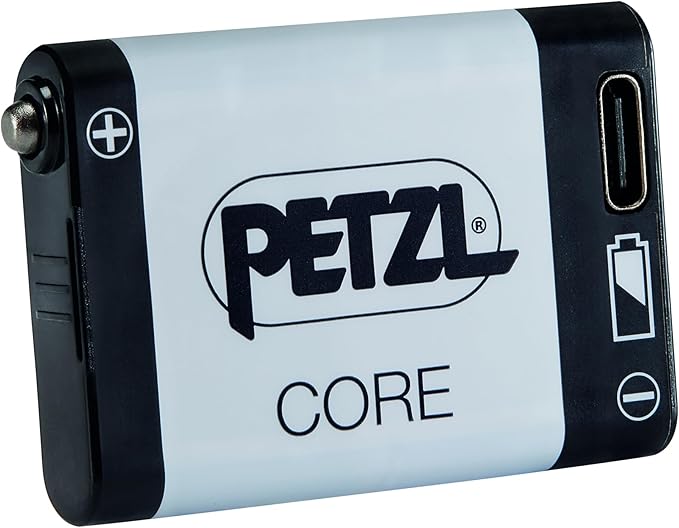
The simplest headlamp in the comparison – and for many, the right choice. 300 lumens, 3 brightness levels, a single button, 92 g. The Tikkina runs on 3× AAA batteries or the optional Petzl Core battery (HYBRID CONCEPT, USB-C rechargeable). A major advantage for preparedness: AAA batteries are available in every supermarket, last up to 10 years in storage, and are ready to use immediately. With the Core battery, it becomes a rechargeable lamp.
Strengths: Lowest price, simplest operation (one button, three levels), AAA batteries or Core battery (HYBRID CONCEPT), only 92 g, IP54. Weaknesses: No red light. 300 lumens are enough for close range, not distance. Plastic housing less robust than aluminum. Runtime: ~2 h (high, 300 lm) / ~10 h (medium, 100 lm) / ~220 h (low). Storage tip: Store batteries separately (prevents parasitic drain). Lithium AAA batteries last up to 10 years. At $19, you can easily store a second one as backup.
# 2. Sofirn SP40 – The Versatile One
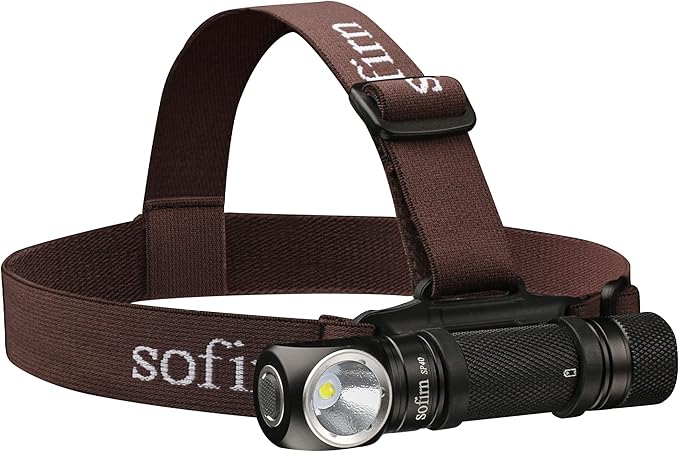
Sofirn SP40 Stirnlampe
✓ Best ValueThe SP40 is more than a headlamp: headlamp, handheld, and magnetic light in one. 1,200 lumens, replaceable 18650 battery, USB-C charging, magnetic endcap, 90° swiveling lamp head. During a power outage, attach the light to the breaker box and work with both hands – or stand it upright on the magnetic base as a table lamp.
Strengths: 3-in-1 function (head/hand/magnet), 18650 replaceable (industry standard), USB-C, 90° swivel head, great price. Weaknesses: Headband is functional but not as comfortable as Petzl. IP rating not officially certified (described as waterproof). No red light. Runtime: ~1 h (high, 1,200 lm) / ~5 h (medium, ~300 lm) / ~50+ h (low). Storage tip: Store in your emergency kit with headband and a spare 18650. The magnetic function is invaluable during power outages.
 Brennenstuhl 18650 Li-Ion Akku (USB-C)~14 €View →
# 3. Petzl Actik – The All-Rounder

Petzl Actik
★ Our PickThe Actik is Petzl’s most popular multi-purpose headlamp: 450 lumens, separate red light, only 94 g. The highlight: hybrid power supply – either 3× AAA batteries or the proprietary Petzl Core battery (USB-C rechargeable). This means: charge via USB in everyday use, swap in AAA batteries in emergencies. The most flexible solution for preparedness.
Strengths: Hybrid power supply (AAA + Core battery), red light, only 94 g, USB-C (with Core), great comfort (Petzl quality). Weaknesses: IPX4 (splash-proof only, not submersible). 450 lumens – significantly less than 18650 lights. Core battery is proprietary and costs ~$20 extra. Runtime: ~2 h (high, 450 lm) / ~8 h (medium, 150 lm) / ~120 h (low) – with AAA. Storage tip: Store AAA batteries and Core battery separately. The hybrid solution is ideal: charge with the Core battery via USB in normal times, switch to AAA anytime in an emergency.
# 4. Fenix HM61R V2 – The Reference
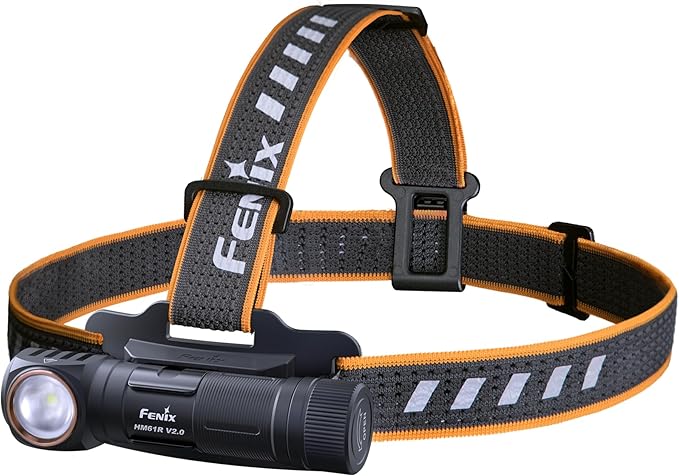
Fenix HM61R V2.0
The HM61R V2 is the reference for serious outdoor headlamps: 1,600 lumens from a replaceable 18650 battery (3,400 mAh), IP68 dust- and waterproof, magnetic charging, separate red light, robust aluminum housing. Fenix offers a 5-year warranty. Compared to the Sofirn SP40, it’s significantly more robust, brighter, and with a better IP rating – but also nearly three times the price.
Strengths: 1,600 lumens, 18650 replaceable (standard), IP68, red light, Fenix quality with 5-year warranty, magnetic charging. Weaknesses: Price (~$82). Magnetic charging instead of USB-C (proprietary charging cable). 130 g is okay but heavier than the Petzl models. Runtime: ~2 h (high, 1,600 lm) / ~7 h (medium, 400 lm) / ~200+ h (low). Storage tip: Store a spare 18650 at 50–60% charge. The HM61R V2 is the headlamp you trust most in an emergency – Fenix’s quality promise is real here.
Brennenstuhl 18650 Li-Ion Akku (USB-C)~14 €View →
# 5. Fenix HM70R – The Powerhouse

Fenix HM70R
The HM70R features a unique dual-beam system: spotlight (1,600 lm, focused beam) plus flood light (400 lm, wide illumination) – both independently controllable or simultaneous. Plus red light, USB-C charging, and a built-in 5,000 mAh battery. IP68 dust- and waterproof. At 158 g, the heaviest lamp in the comparison, but also the most powerful.
Strengths: Dual-beam (spot + flood), 1,600 lm, red light, USB-C, IP68, 5,000 mAh battery (long runtime), Fenix quality. Weaknesses: Built-in battery – not easily replaceable after 3–5 years. 158 g (heaviest in comparison). Price (~$91). Runtime: ~1.5 h (turbo, 1,600 lm) / ~10 h (medium, 400 lm) / ~200+ h (low, spot). Storage tip: Charge to 50–60% and check every 6 months. The built-in battery is the only downside for long-term storage – but you get the best dual-beam system on the market.
# Battery Systems and Shelf Life
| System | Replaceable | Capacity | Shelf Life | Models |
|---|---|---|---|---|
| 3× AAA | Yes (standard) | ~1,200 mAh | Alkaline 5–7 yr, Lithium up to 10 yr | Petzl Tikkina, Petzl Actik |
| 18650 Li-Ion | Yes (standard) | 2,500–3,500 mAh | 3–5 years at 50–60% | Sofirn SP40, Fenix HM61R V2 |
| Petzl Core | Yes (proprietary) | 1,250 mAh | 3–5 years at 50–60% | Petzl Tikkina, Petzl Actik (optional) |
| Built-in | No | 5,000 mAh | 3–5 years at 50–60% | Fenix HM70R |
AAA batteries for preparedness: Alkaline batteries last 5–7 years, Lithium AAA (e.g. Energizer Ultimate Lithium) up to 10 years – the best for pure storage. Always store separately from the lamp.
Storing 18650 batteries properly: Charge to 50–60%, store cool and dry (60–77°F / 15–25°C). Check every 6–12 months and recharge if needed. Never store fully empty or fully charged.
Brennenstuhl 18650 Li-Ion Akku (USB-C)~14 €View →
# Our Recommendations
Best Budget Entry: The Petzl Tikkina – for $19 you get 300 lumens, AAA batteries, and Petzl quality. The simplest and cheapest preparedness headlamp.
Best Value: The Sofirn SP40 – for $30, a 1,200-lumen headlamp with 18650 battery, USB-C, magnet, and 3-in-1 function. Unbeatable versatility.
Most Flexible Power: The Petzl Actik – AAA batteries or Core battery, plus red light and only 94 g. The smartest hybrid solution for everyday and preparedness.
Premium Reference: The Fenix HM61R V2 – 1,600 lumens, 18650, IP68, red light, 5-year warranty. The headlamp you trust most in an emergency.
Maximum Performance: The Fenix HM70R – dual-beam with spot and flood, IP68, USB-C. The most powerful headlamp in the comparison – but with a built-in battery.
Our ideal preparedness combo: A Petzl Tikkina ($19) as a reliable backup with AAA batteries plus a Sofirn SP40 ($30) as a powerful primary light with 18650 battery. Together under $50, two different battery systems for maximum flexibility. Add a pack of lithium AAA batteries and 2 spare 18650 cells.
# Frequently Asked Questions
Headlamp or flashlight – which is more important?
Both have their place. A headlamp is often more useful in practice because you have both hands free – for repairs, first aid, or evacuation. A flashlight offers more range and output. Ideal: one of each type. Our flashlight comparison for preparedness is here.
AAA or 18650 – which system is better for preparedness?
AAA has the advantage of universal availability and up to 10 years shelf life (lithium AAA). 18650 offers significantly more power and is rechargeable. The best solution: keep both systems – an AAA lamp as backup, an 18650 lamp as primary light.
Do I need red light?
Red light preserves night vision and is less blinding to others. During nighttime power outages, in a tent, or on night hikes, it’s a major advantage. Not a must for pure home use, but nice to have.
How many lumens does a headlamp need?
150–300 lumens are enough for most close-range tasks (cooking, reading, repairs). 400–800 lumens work well for hiking and trail running. Over 1,000 lumens is rarely needed – the medium setting matters more than the max value in everyday use.
Why is the Fenix HM70R so expensive when the battery is built-in?
The dual-beam system (spot + flood, independently controllable) is unique in this price range. Plus IP68, USB-C, red light, and Fenix quality. The built-in 5,000 mAh battery lasts very long in everyday use. For pure long-term storage (5+ years), the HM61R V2 with replaceable 18650 is the better choice.