You have home insurance, health insurance, maybe disability coverage. You hope you’ll never need any of it – but you have it because you know it would be foolish to go without when something goes wrong. Preparedness works the same way: an afternoon of effort, a few hundred dollars – and a much better position when life doesn’t go as planned.
When people start thinking about it, they quickly run into two extremes: either every risk is dismissed as overblown, or they’re told civilization is about to collapse. Neither is useful.
This article takes a sober look at the hazards that are genuinely relevant – primarily written from a German and Central European preparedness perspective. Not as a scare tactic, but as a foundation for reasonable decisions.
# Power Outages
Electricity is the backbone of modern life. Without it, refrigerators, heating systems, gas stations, cell towers, ATMs, and water treatment plants stop working.
Germany’s power grid is among the most reliable in the world, with an average household outage time of just 12.8 minutes per year (2023, Bundesnetzagentur). For comparison, the US averages over 80 minutes. But local and regional outages still happen regularly. In November 2005, the Münsterland region lost power for up to 5 days when high-voltage pylons collapsed under ice loads, affecting roughly 250,000 people.
In the US, the Texas power crisis of February 2021 left over 4.5 million households without electricity for days in sub-zero temperatures, resulting in at least 246 deaths. The cause: a power system not designed for extreme cold.
A continent-wide blackout is statistically unlikely but not impossible. European grid operators (ENTSO-E) regularly drill for such scenarios. In January 2021, a frequency deviation in the European grid briefly brought the system to a critical state.
What this means for preparedness: A power outage lasting 1–3 days is a realistic scenario anywhere. Flashlights, batteries, a battery-powered radio, and supplies that don’t require refrigeration cover this case.
# Extreme Weather: Flooding, Storms, Heat
Climate change is measurably altering the frequency and intensity of weather events. This isn’t a prediction – it’s observation.
The Ahr Valley flood in Germany in July 2021 was the deadliest natural disaster in the country in decades: over 180 dead, damages exceeding 30 billion euros. In the US, Hurricane Ian (2022) caused $110 billion in damages. The European heat wave of 2022 caused over 60,000 excess deaths across the continent.
Heat waves are becoming more frequent and more intense. In Germany alone, heat-related deaths in 2022 numbered around 4,500 – more than traffic fatalities that year.
Winter storms and heavy snowfall remain relevant too. The January 2019 snow chaos in the Alps led to weeks of power cuts, road closures, and evacuations.
What this means for preparedness: Extreme weather varies by region. If you live in a flood zone, your preparations differ from those in a high-rise apartment in a city center. A home emergency plan and a packed go-bag are sensible in vulnerable areas.
# Pandemics
COVID-19 demonstrated how quickly a health crisis can reshape daily life. Quarantines, closed businesses, disrupted supply chains, overwhelmed hospitals – all of this was abstract to most people before 2020.
Epidemiologists rate the probability of future pandemics as high. Zoonotic diseases (jumping from animals to humans) are increasing due to habitat loss, intensive animal farming, and global mobility. The WHO maintains a regularly updated list of pathogens with pandemic potential.
What this means for preparedness: A supply of basic food, medications, hygiene products, and drinking water for 10–14 days eliminates dependence on panic buying and empty shelves. Anyone taking regular prescription medication should always maintain at least a two-week buffer.
# Supply Chain Disruptions
Modern logistics operates on the just-in-time principle: supermarkets typically carry enough stock for 2–3 days of normal demand. Under elevated demand – as during the COVID pandemic – shelves empty within hours.
The container shipping crisis of 2021/2022 demonstrated how fragile global supply chains are. A single container ship (the Ever Given in the Suez Canal, March 2021) blocked one of the world’s most important trade routes for six days. The ripple effects on delivery times lasted months.
Domestic supply chains can be disrupted too. Strikes at refineries, low water levels on major rivers (the Rhine in summer 2022 disrupted barge shipping significantly), or border closures during pandemics can all impact regional supply.
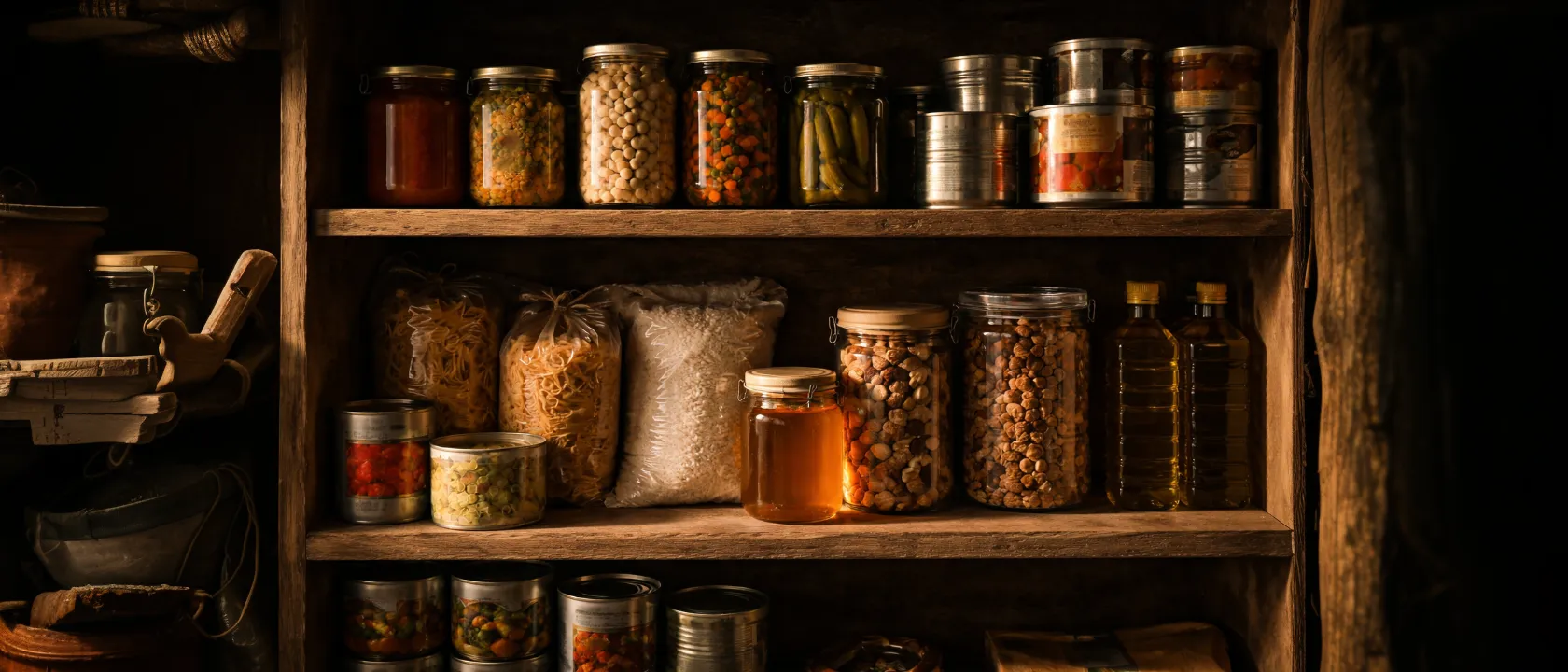
What this means for preparedness: A manageable supply of food and everyday goods – rotated regularly and consumed before expiration – isn’t hoarding. It’s sensible household management. Germany’s Federal Office for Civil Protection recommends supplies for 10 days. How to build one: → Building a Food Supply
# Inflation and Economic Instability
German inflation reached 7.9% in 2022 – the highest since the 1970s. Energy prices temporarily doubled. Food prices rose over 20%. In the US and UK, similar patterns emerged. For many households, this was a direct and immediate burden.
Economic crises follow no schedule, but they come regularly: the 2008 financial crisis, the 2011 eurozone crisis, the 2020 COVID recession, the 2022 energy price shock. None of these collapsed supply systems in developed nations, but each demonstrated how quickly financial circumstances can change.
What this means for preparedness: Financial resilience is an underrated part of preparedness. An emergency fund covering 3–6 months of expenses, reducing debt, and not depending entirely on a single income source all reduce vulnerability. Cash at home is a simple safeguard when power outages take ATMs and card payment systems offline.
# Geopolitical Crises and War
Russia’s invasion of Ukraine in February 2022 fundamentally shifted the security landscape in Europe. A war of aggression on European soil was considered unthinkable by many – until it happened.
A direct military conflict in Western Europe remains unlikely according to most security analysts. But the indirect effects of geopolitical tensions are already real: energy price shocks, cyberattacks on infrastructure, refugee movements, and defense spending that displaces other government priorities.
NATO and multiple European governments now explicitly recommend civilian preparedness. Sweden distributed a booklet (“Om krisen eller kriget kommer” – “If crisis or war comes”) to every household in 2018.
What this means for preparedness: The probability of a direct war scenario in most Western nations is low. But the side effects of geopolitical crises – energy shortages, inflation, cyberattacks on infrastructure – can affect anyone. An emergency plan, supplies, and basic independence from digital systems (cash, battery radio, written contact list) are practical measures.
# Cyberattacks on Critical Infrastructure
Digitalization has reached nearly every aspect of daily life – including critical infrastructure: energy, water, hospitals, banking, and transport. That makes it vulnerable.
In 2021, a ransomware attack on Germany’s Anhalt-Bitterfeld county paralyzed local government for weeks. A state of emergency was declared. In the US, the Colonial Pipeline attack in 2021 disrupted fuel supply along the entire East Coast for days. Hospital systems, municipalities, and utilities are increasingly targeted.
Germany’s Federal Office for Information Security (BSI) rates the cyber threat level as “tense to critical.” Attacks on energy providers and local governments are increasing in both frequency and sophistication.
What this means for preparedness: A cyberattack on infrastructure acts like a power outage with additional complications: banking systems offline, no card payments, no digital communication. The preparation is identical: cash, supplies, analog radio, a first aid kit, and a plan that doesn’t depend on technology.
# Earthquakes and Geological Risks
Much of Europe isn’t in a major seismic zone, but seismic activity exists. Germany’s Lower Rhine region, the Upper Rhine Graben, and parts of southern Germany see regular minor earthquakes. The 1992 Roermond earthquake (magnitude 5.9) caused property damage across parts of Germany and the Netherlands.
In the US, seismic risk is more significant: the San Andreas Fault, the New Madrid zone in the Midwest, and the Cascadia subduction zone in the Pacific Northwest all represent serious potential hazards.
The probability of strong earthquakes in Central Europe is low – but not zero. For regions in known seismic zones, basic precautions are sensible: secure heavy shelves, don’t hang heavy objects above beds, know what to do during an earthquake.
# Artificial Intelligence: New Risks Through Automation
AI isn’t a classic disaster scenario like a flood or a power outage – but it’s changing risk profiles in ways that matter for personal preparedness.
The most obvious aspect: the labor market. According to a Goldman Sachs study (2023), roughly 300 million jobs worldwide could be affected by generative AI. That doesn’t mean they’ll all disappear – but many will change fundamentally, and the transition will come faster for some than expected. The International Monetary Fund estimates that in advanced economies, about 60% of jobs are exposed to AI, with roughly half benefiting and the other half potentially coming under pressure.
Less obvious but already visible: AI-powered disinformation. Deepfake videos and audio are now realistic enough to be nearly indistinguishable from genuine recordings without technical tools. During crises – political, economic, or natural – targeted disinformation can amplify public panic, erode trust in authorities, and complicate response efforts. The ability to critically evaluate information is becoming a core competency.
Beyond that, dependence on AI systems in critical infrastructure is growing. Energy grids, logistics, financial trading, and medical diagnostics increasingly rely on automated decisions. That brings efficiency but also creates new attack surfaces and failure modes. A flawed AI model or a targeted attack on an AI system can have cascading effects that go beyond traditional cyberattacks.
What this means for preparedness: Financial resilience becomes more important – anyone relying on a single income source vulnerable to automation should diversify. Media literacy protects against disinformation during crises. And the general recommendation to avoid total dependence on digital systems applies here even more strongly than with conventional cyberattacks.
Beyond that, preparedness in the age of AI also means rebuilding real, tangible skills – things no algorithm can replace. Knowing how to fish, identify edible wild plants, grow a kitchen garden, keep chickens, repair and build things yourself, or barter with neighbors makes you less dependent on automated systems and global supply chains, and more economically resilient. These skills create real value – regardless of how the labor market shifts. For an overview of practical skills worth learning, see our Skills section.
# What Does This All Add Up To?
None of these scenarios requires a bunker, a year’s worth of supplies, or a life lived in constant fear. But taken together, they show that disruptions to normal life happen regularly, and they can affect anyone.
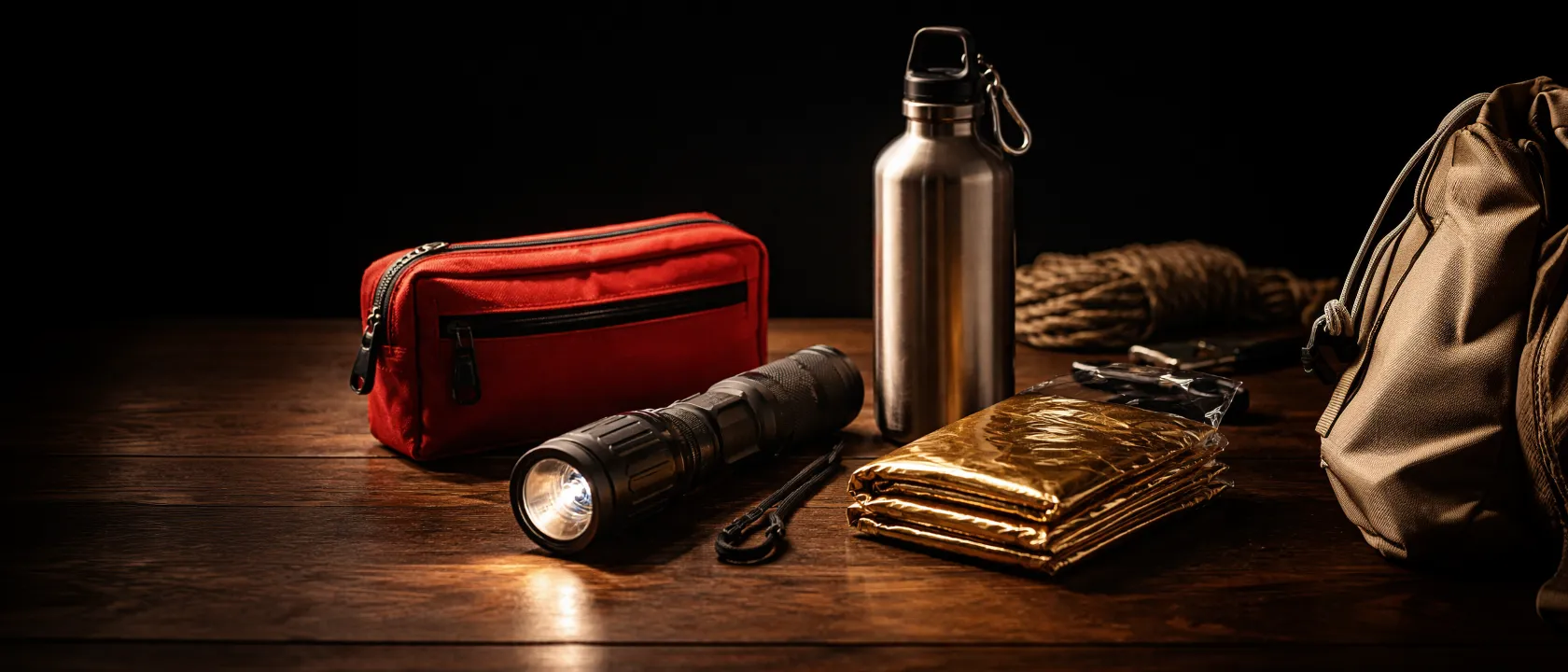
The good news: preparation for most of these scenarios is identical. A home emergency plan, a supply of water and food for 10–14 days, a first aid kit paired with basic skills, cash, a reliable flashlight, and a battery-powered radio – that covers the vast majority of situations.
 Fenix PD25R~59 €View →
 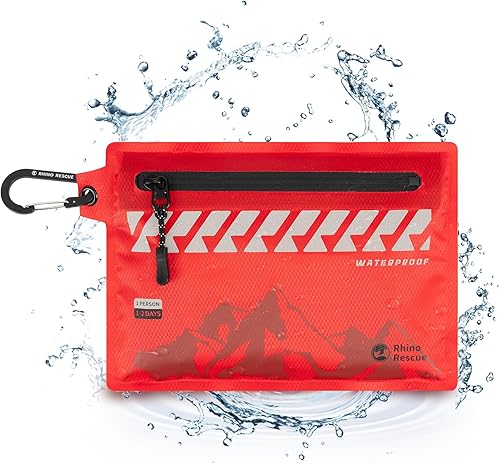 Rhino Rescue Erste-Hilfe-Set~25 €View →
  Sawyer Squeeze SP129~40 €View →
  Katadyn Micropur Forte MF 1T~25 €View →
Preparedness isn’t paranoia. It’s the pragmatic response to a world that doesn’t always work the way you expect.